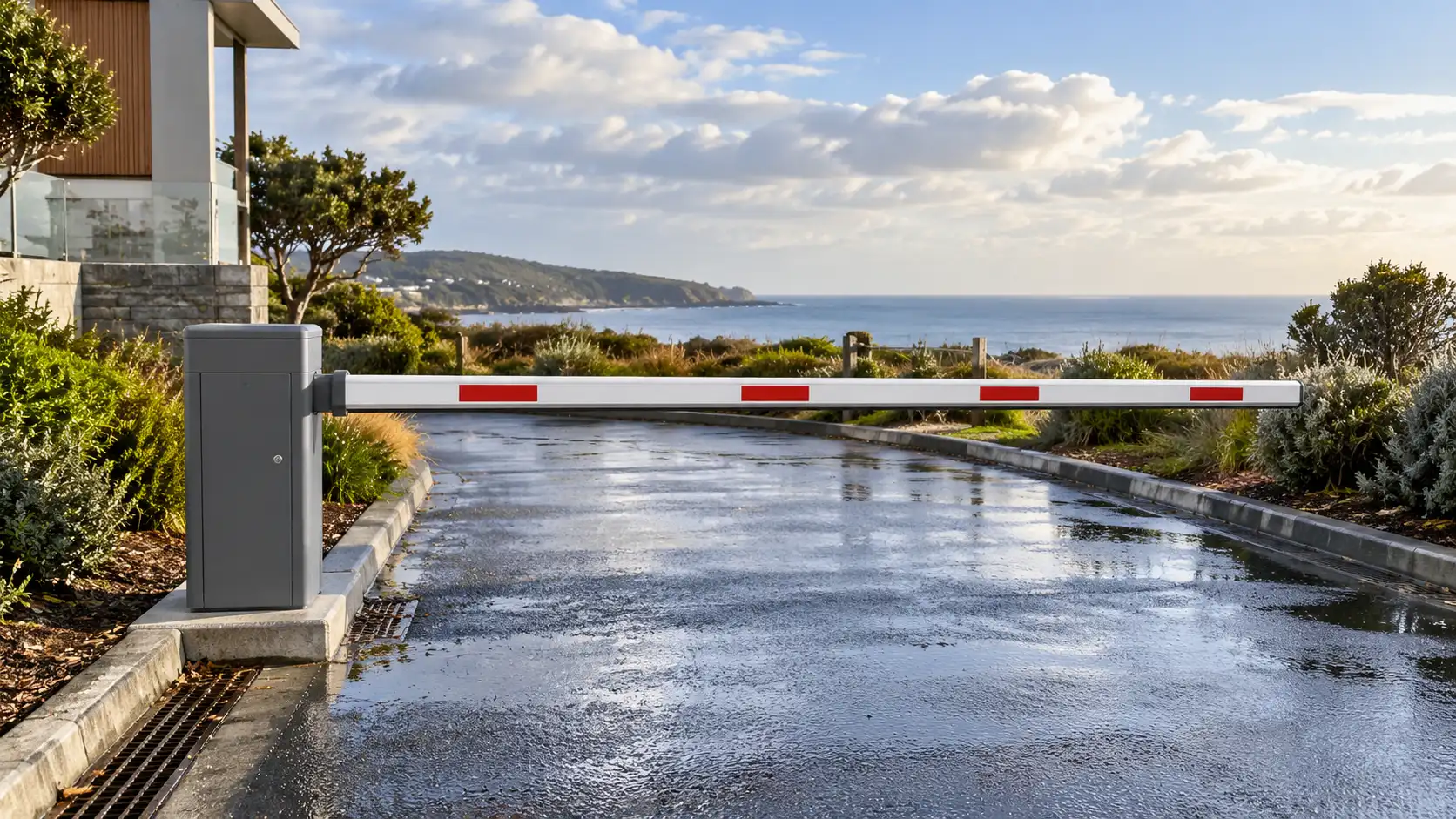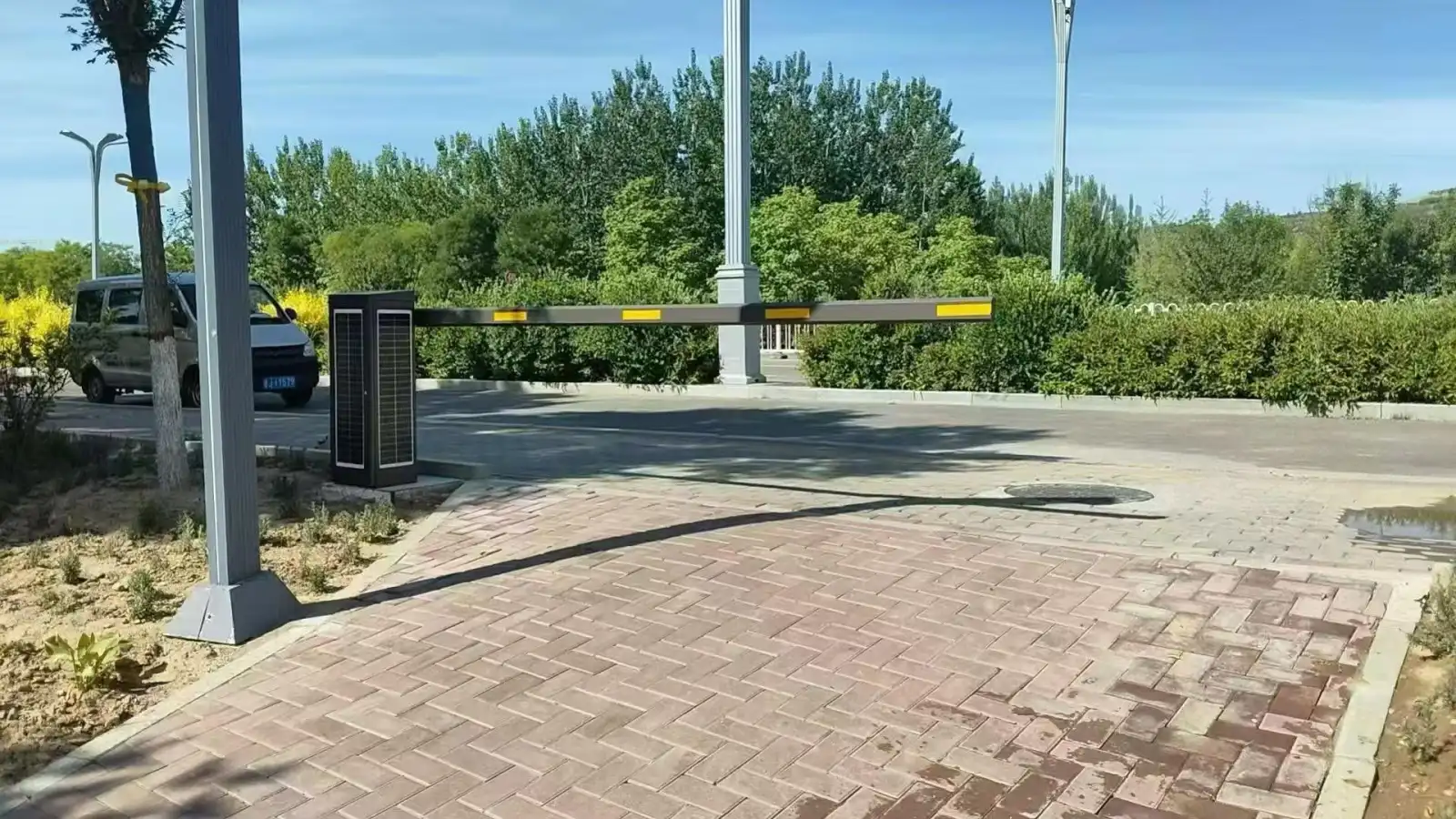
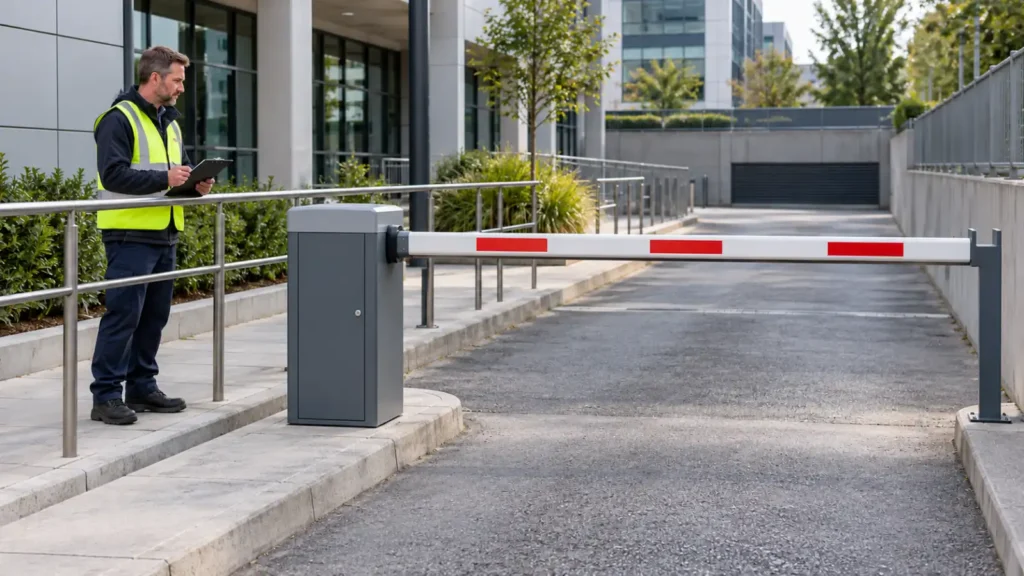
You may be able to reuse an existing barrier gate when adding ANPR or a new access-control system, but an opening demonstration is not enough to approve it. The retained machine must suit the intended traffic and environment, accept a documented control interface, retain appropriate protection and have a workable maintenance arrangement. Check the installed controller as carefully as the cabinet: an old barrier can contain a replacement board with different behaviour.
The practical result is a written decision for each lane: retain, retain with approved changes, replace, or hold pending evidence. This guide helps property owners, distributors and integrators reach that decision before buying a camera, terminal or complete new barrier. It is a survey and procurement checklist; the electrical design and commissioning belong with competent people using the exact equipment manuals.
Separate what can stay from what needs to change
Replacing a credential reader or adding number-plate recognition does not automatically require replacing the motor and boom. Equally, a cabinet that still opens is not evidence that its board, detectors or protective functions are suitable for the new operating arrangement.
List the existing barrier assembly, controller, reader, detector devices, power supplies, network equipment and software separately. Mark each as retained, new, removed or unresolved. A ground loop, for example, is a physical installation; its detector electronics and configured role still need their own assessment. Reusing one does not approve the others.
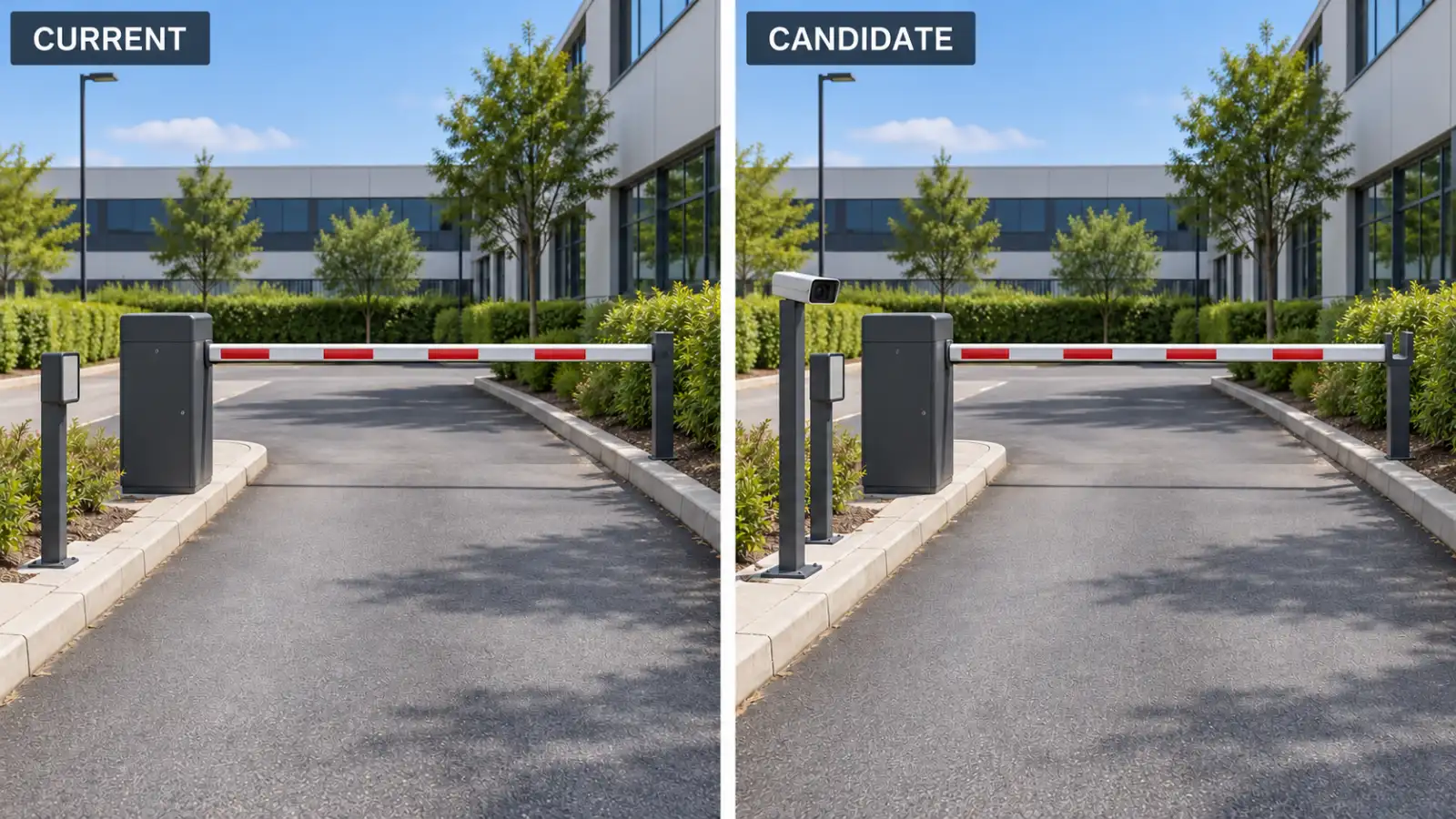
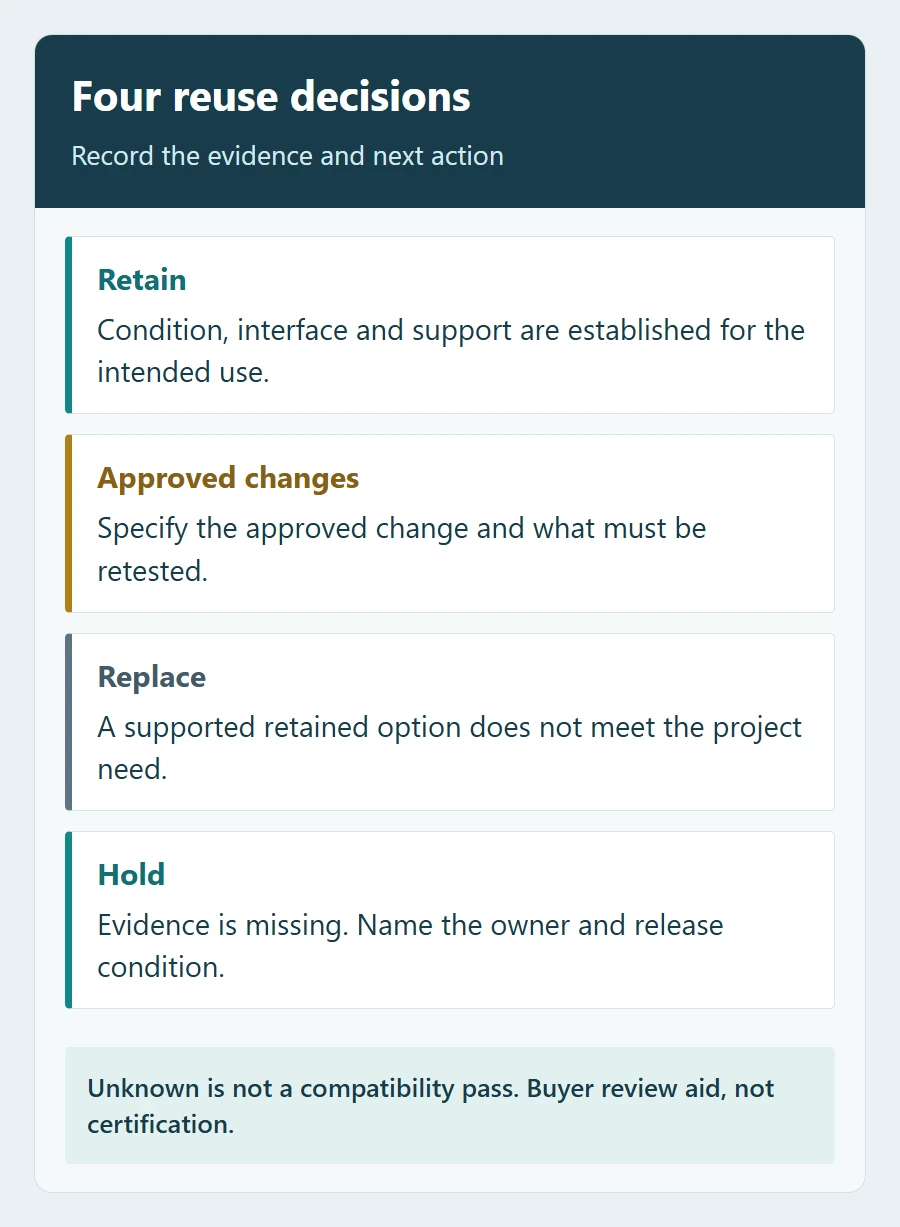
Consider four outcomes:
- Retain: the machine’s condition, documented interface, required operating behaviour and support are acceptable for the proposed use.
- Retain with approved changes: a specified repair, supported interface or approved controller change closes an identified gap. Obtain a scope, responsibility and retest plan before ordering.
- Replace: the necessary condition, protection, functionality or support cannot be established at an acceptable project cost and risk.
- Hold: important evidence is missing. State what is missing, who will obtain it and what releases the decision; “unknown” is not a compatibility pass.
A replacement board is not a universal shortcut. Retaining the mechanics while changing the controller requires approval for the complete combination, including motor, position sensing, protection, power and configuration. Compare that supported option with a replacement assembly rather than pricing an unidentified board in isolation.
Build the reuse evidence sheet before requesting a quote
Start with an external photograph of the barrier, its identification plate, the boom and the lane layout. Ask the responsible technician to record the installed board identity, revision, settings and actual wiring against the correct manual. Buyers should not open an energised cabinet to obtain photographs. Existing faults and changes made by previous contractors need recording, not hiding inside a general “working condition” description.
| Item to assess | Evidence to obtain | Decision it supports |
|---|---|---|
| Machine and controller identity | Barrier model/serial, installed board and revision, correct manuals, known modifications. | Whether the proposed interface and replacement parts actually apply. |
| Mechanical condition and intended use | Service and fault history; competent inspection of mechanism, boom, mountings and release; expected peak use and environment. | Whether retaining the assembly is reasonable before adding controls. |
| Power and cable routes | Documented supply needs, existing load/cable assessment, segregation, protection and new-device power scope. | Whether new equipment needs its own approved supply or infrastructure work. |
| Control commands | Exact input/output types, electrical ratings, signal duration, configured action and command priorities. | Direct compatibility or the need for an explicitly approved interface. |
| State and fault reporting | Available outputs, what each means, receiving interface and behaviour when a signal is missing. | Which status the new software can honestly show. |
| Detection and protection | Device identity, purpose, connections, monitoring requirements and approved response to activation or failure. | What can be retained and what needs reassessment or replacement. |
| Other command sources | Existing cards/remotes, intercom, guard controls, schedules and any emergency arrangement. | Who can move or hold the barrier, and which action takes priority. |
| Support and handover | Parts availability, configuration access, service provider, warranty position and signed test responsibility. | Whether the retained system will remain maintainable. |
Keep measured findings separate from missing information. Record the document revision and technician’s assessment for the actual installed unit; a photograph of a similar model online cannot confirm the controller inside yours.
Check what a command means, not just whether two terminals exist
A dry contact is a switching contact that does not itself supply the control voltage. A powered output or an electronic output may behave differently. The sender and receiver specifications must agree; matching wire colours or seeing “relay” on a product page does not establish a safe connection. Do not apply an external voltage to an input intended for a contact closure unless the exact manufacturer design permits it.
Electrical compatibility is only one part. A step-by-step input may sequence through different actions, whereas a dedicated open input requests a particular action. A brief pulse and a maintained signal can also produce different results. The model-specific Nice M/L-Bar manual, for example, distinguishes command functions and programmable outputs. It illustrates why the actual board and configuration matter; its instructions are not a wiring specification for a SHUNJIE or other retained barrier.
Have the integrator write the proposed command agreement: the sender, receiving controller/input, electrical interface, signal duration, expected behaviour while closed, opening, open and closing, plus the response to repeated requests. Define who owns closing. Agree how local controls, hold-open and emergency arrangements interact, under the applicable equipment and site requirements.
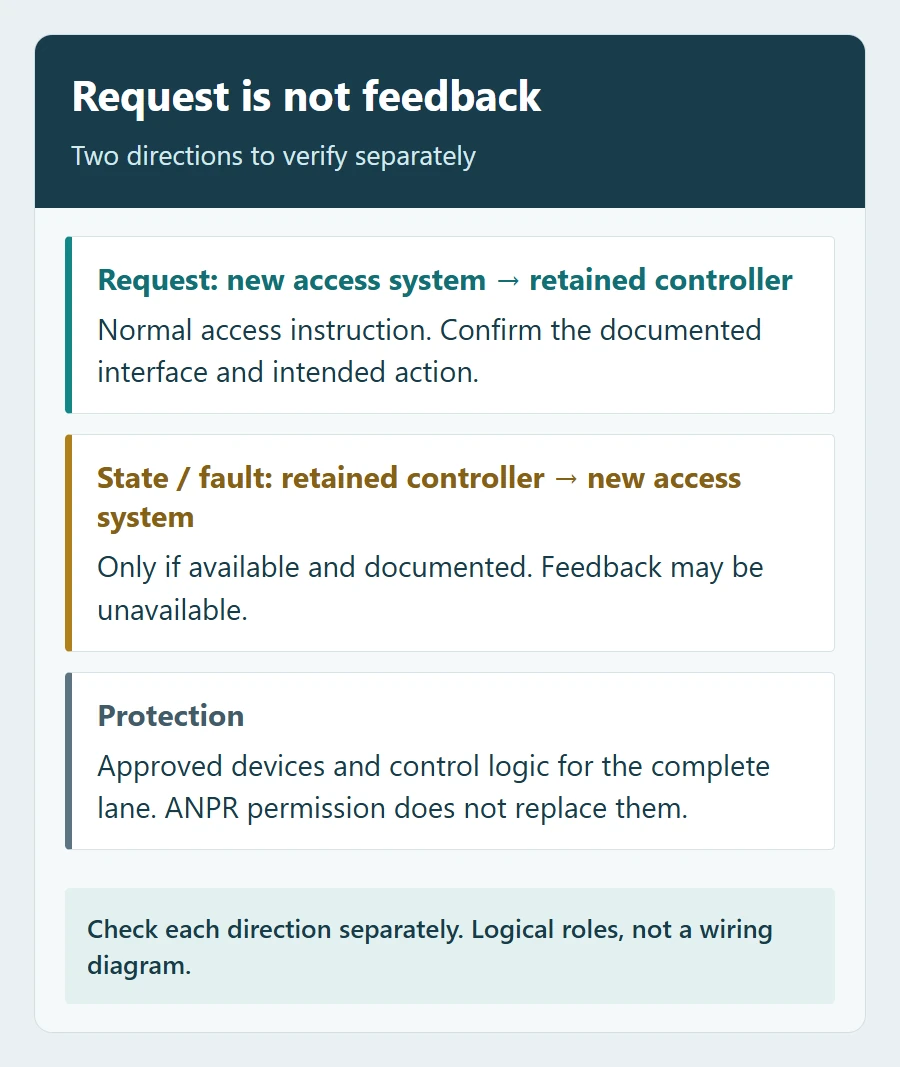
Command sent is not position confirmed. Software can know it sent a request without knowing whether the arm moved. Where position or fault feedback is required, identify a documented output or supported monitoring method and test its meaning. A lamp output is not automatically a dry-contact status output; an occupancy detector is not automatically an arm-position sensor. If feedback is unavailable, show the state as unconfirmed rather than assuming “open” after a timer. Record the source and meaning of each displayed state in the handover documents.
The recognition event, access decision, movement command and observed state are separate parts of the system. For the wider data and software connection, use the ANPR camera interface checklist. This reuse decision still depends on the existing machine, not just the new camera’s software features.
Retain appropriate protection, not just the boom
Identify what every detector does: trigger recognition, request exit, detect vehicle presence or perform a specified protective function. Those roles are not interchangeable. Ordinary vehicle detection does not establish protection for pedestrians, children or cyclists, and ANPR authorisation does not establish that the movement area is clear.
Ask the competent assessor to review the complete lane: the boom’s movement, pedestrian route, visibility, foreseeable users, local controls and the response of the assembled system. UK HSE guidance on powered-gate safety emphasises the combination and behaviour of components, ongoing maintenance and reassessment of substantial changes. That is UK guidance, not a blanket legal conclusion for every country; apply the relevant local requirements and model instructions.
Do not approve reuse by bypassing an old protective input to make a demonstration work. Unknown or failed protection needs resolving before normal operation. A change to automatic closing, command priority or operating mode can require review even when the cabinet, motor and boom remain in place.
Two retrofit scenarios that expose hidden costs
The old reader stays alongside new ANPR
A condominium wants residents to keep existing cards while adding plate recognition. Both systems may be able to request movement, but that alone does not settle how a hold-open request, a new automatic-close setting or a guard command will behave. Agree the combined control plan before treating the two systems as independent additions.
Record each command source and its permitted action. Test the intended combinations under a controlled commissioning plan, including repeated requests and recovery from a retained hold-open condition. Do not casually parallel outputs or assume one credential system can safely override the other. The saving comes from a documented retained scope, not from leaving unexplained old wiring connected.
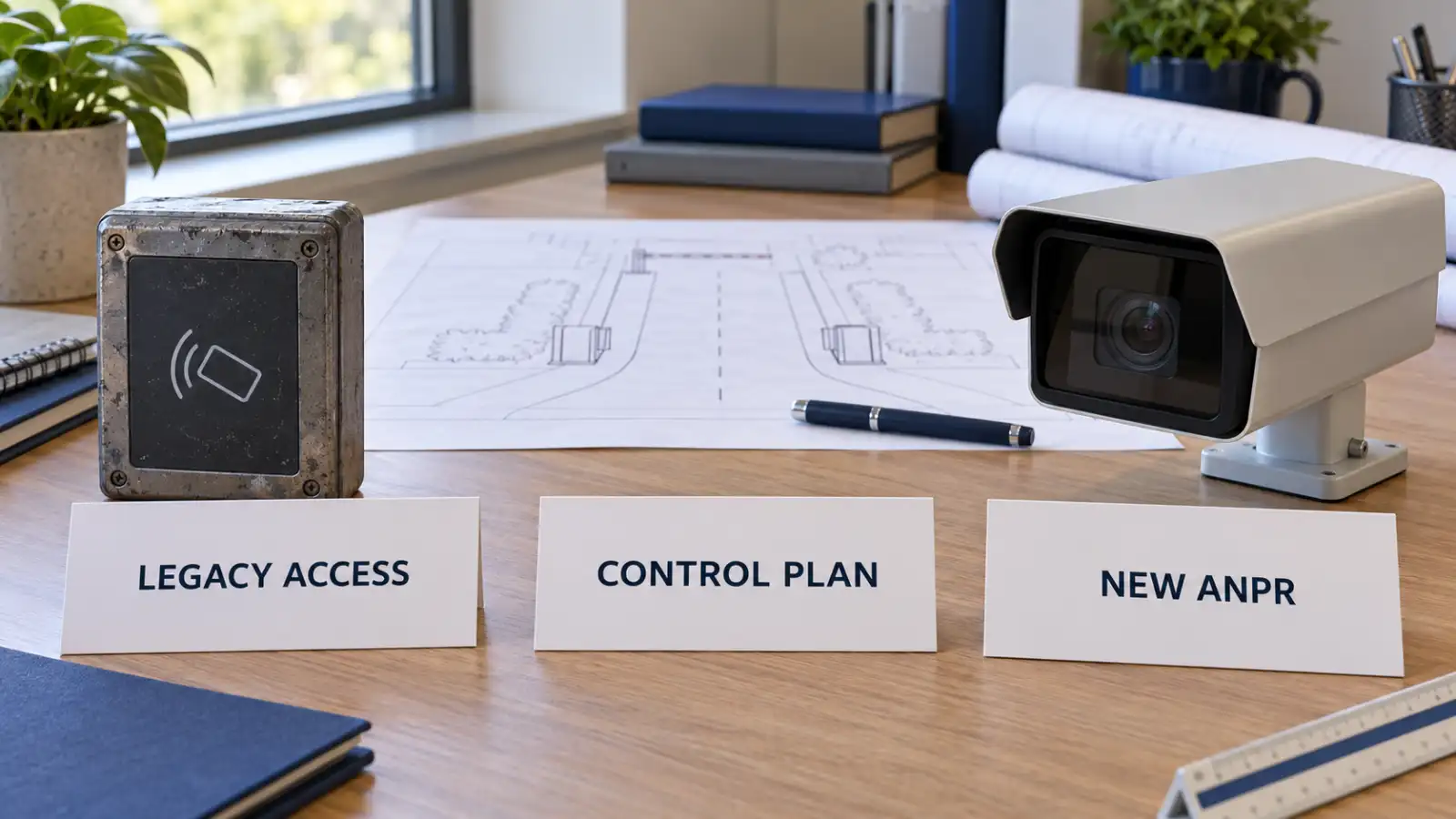
The cabinet looks usable, but the board is undocumented
An office has a serviceable-looking barrier, no reliable board manual and an unavailable original installer. An inexpensive new reader does not resolve the missing input specification, controller settings, protection arrangement or future repair support. Put those gaps into the quote instead of marking the whole lane “compatible”.
Request two supported options if appropriate: retain with a precisely identified approved repair/interface, or replace the assembly and any necessary related equipment. Compare surveys, parts, installation, commissioning, downtime arrangements and ongoing support on the same scope. No general percentage saving can be established from the cabinet’s appearance.
Accept the retained lane against recorded behaviour
Agree the acceptance record before installation. The following are planning prompts for a competent commissioning team, not instructions to put people or vehicles in the path of a moving boom. Use the manufacturer’s methods, a controlled area and an agreed stop/rollback arrangement. Record actual results; this checklist does not claim that a particular retrofit has passed.
| Planned check | What the agreed result must establish | Evidence to keep |
|---|---|---|
| Baseline before changes | Existing faults, settings and approved functions are recorded before new equipment is connected. | Dated survey, original configuration and unresolved issues. |
| Normal authorised request | The correct lane responds as agreed; command logs and actual movement are distinguished. | Request, controller response and available position evidence. |
| Denied or repeated request | No unauthorised movement or unintended step-by-step action; repetition follows the agreed logic. | Inputs, starting state and observed outcome. |
| Old and new control sources | Card, recognition, guard and hold-open priorities behave as documented. | Combination cases and authorised control plan. |
| Detection and protective functions | The complete installation responds to the approved activation and fault tests. | Device identities, method, response and competent sign-off. |
| Missing feedback or communication | Unknown state and recovery are handled explicitly; no unsupported open/closed indication. | Observed signal loss, operator indication and recovery record. |
| Restart and manual/emergency arrangements | Return of service and applicable local procedures follow the agreed design. | Initial state, permissions, observed behaviour and responsibility. |
| Handover and rollback | Settings, drawings, service ownership and the approved recovery arrangement are usable. | Final documents, open issues and acceptance decision. |
Ask for a written retained-equipment proposal
Have the owner, barrier service provider and new-system integrator agree who is responsible for the old mechanics, interface design, protective functions, software configuration, commissioning and future faults. Ask how modifications affect each supplier’s warranty and service commitment; do not assume that all warranties remain intact or that every modification automatically voids them.
Use the following enquiry brief as a reader worksheet. Fill in known facts, mark unavailable items as unknown and attach the relevant documents. A useful response identifies retained and replaced parts, exclusions, outstanding evidence, test ownership and support terms, rather than simply promising compatibility with “most barriers”.
EXISTING-BARRIER RETROFIT ENQUIRY
Site/country and lane purpose:
Barrier model/serial and installed controller/revision:
Available manuals, settings and service/fault history:
Boom/lane layout, pedestrian route and intended traffic:
Current readers, detectors, protection and other controls:
New recognition/access system and required behaviour:
Required position/fault feedback; known unavailable signals:
Proposed retained/new/removed equipment:
Unknown items and person responsible for checking them:
Commissioning, downtime/rollback and future support owner:
Requested decision: retain / approved changes / replace / hold
For a SHUNJIE recognition upgrade, send the existing-equipment record and required lane behaviour with your ANPR camera enquiry. Ask for the proposed configuration and interface to be confirmed against the exact retained controller. That gives both sides a practical basis for a quote without assuming that a new camera makes every existing barrier compatible.
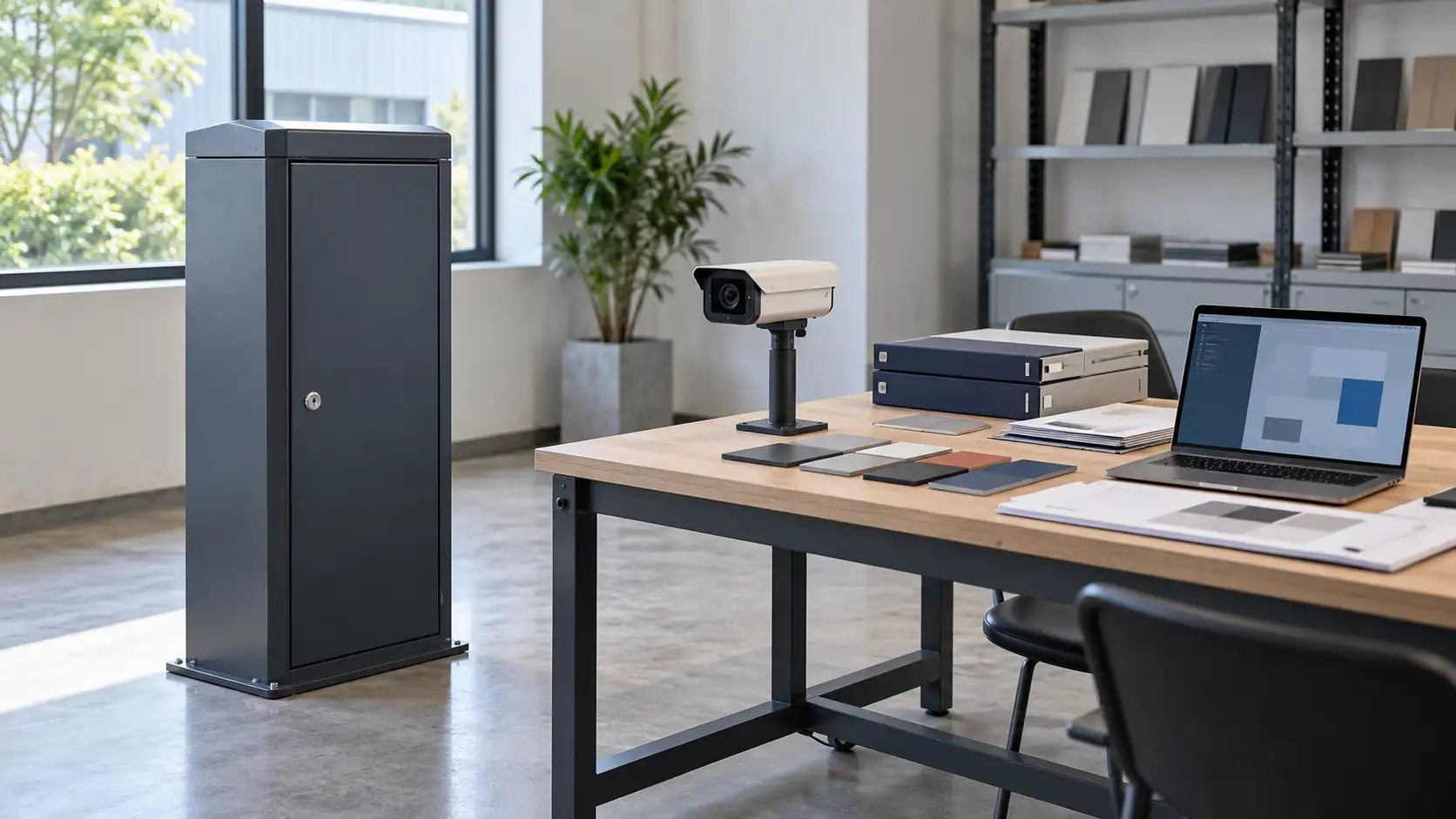
Featured image: AI-generated survey scene with generic equipment. Not a SHUNJIE installation, a completed inspection or proof that the barrier can be reused.
Featured image: AI-generated survey scene with generic equipment. Not a SHUNJIE installation, a completed inspection or proof that the barrier can be reused.