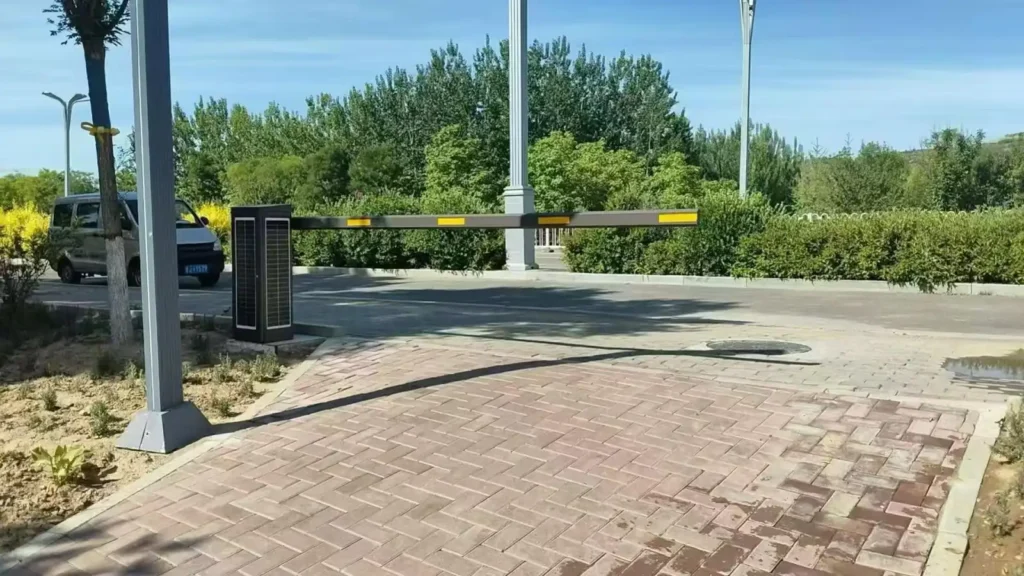
SHUNJIE offers a solar barrier gate for access points where a mains electricity connection is unavailable or difficult to bring to the entrance. The solar product uses solar power and stored energy to operate the boom, with solar panels integrated into the cabinet rather than relying on a utility supply to the barrier.
For a rural access road, a temporary entrance or a remote part of a property, this gives buyers another option when planning vehicle control. The key benefit is freedom from a mains connection at the barrier location. The site still needs suitable sunlight, a sound installation and a power plan for the complete access-control arrangement.
A solar-powered barrier in an integrated cabinet
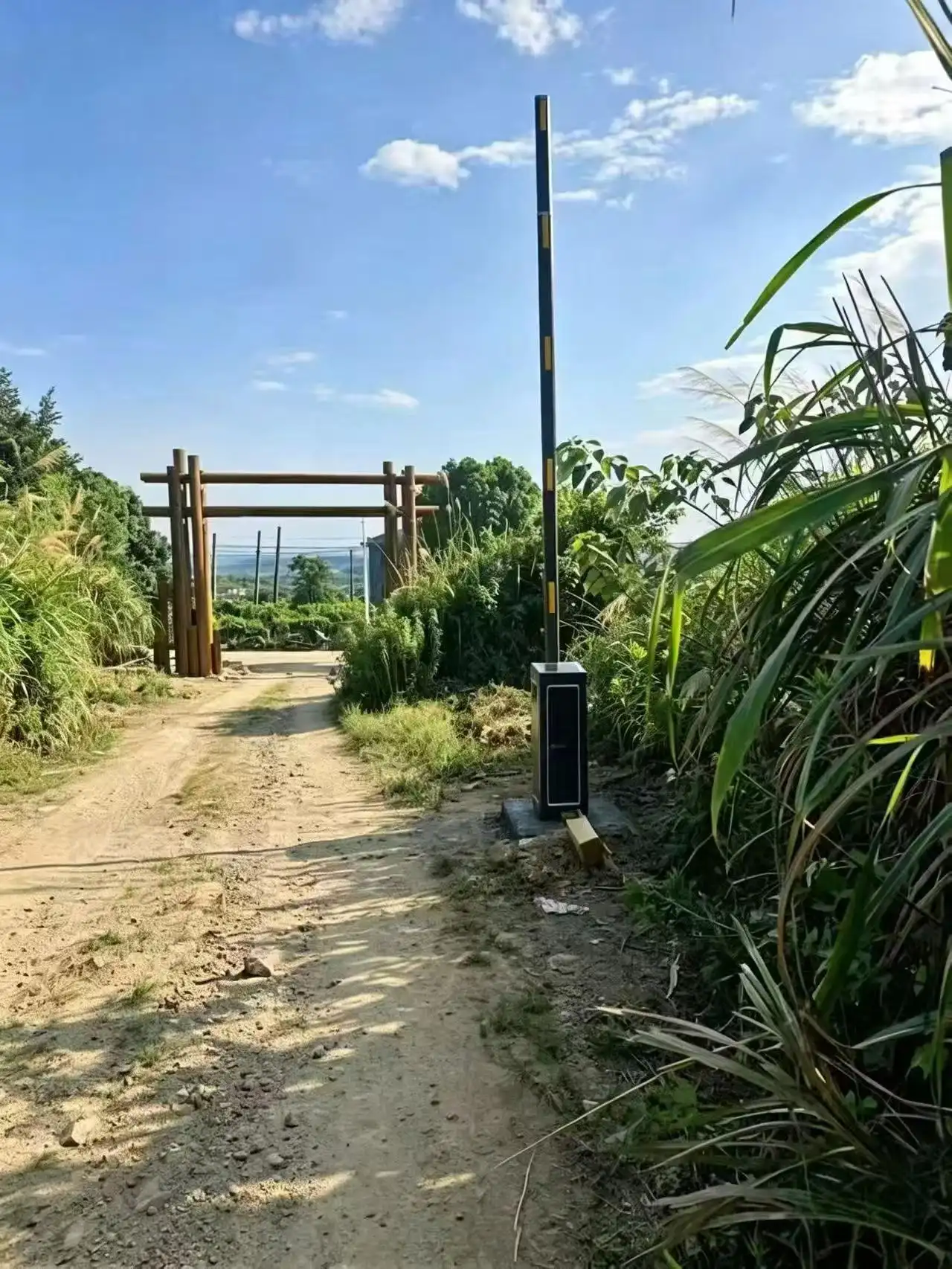
The supplied product views show a dark cabinet with integrated panel surfaces and a straight boom with yellow reflective markings. They show the arm in both raised and closed positions. This compact arrangement makes the solar-powered product worth considering where a separate mains cable route would complicate an entrance project.

The photographs explain the visible layout; the ordered configuration determines the arm dimensions, operating settings and supporting equipment. Do not transfer the specifications of another SHUNJIE barrier model to this solar version simply because both use a straight arm.
| Product point | What it means for the buyer |
|---|---|
| Solar-powered operation without a mains connection | Consider it where utility power is unavailable at the entrance or a new supply route is difficult. |
| Panel surfaces integrated into the cabinet | Assess sunlight and shading at the actual cabinet position, as well as the space needed by the boom. |
| Manufacturer-stated full-charge endurance of 12,000 complete open–close cycles | The stated figure applies with the standard arm length and standard speed; match the quotation to the configuration you need. |
What the 12,000-cycle figure means
SHUNJIE specifies 12,000 complete opening-and-closing cycles from a full-charge state, using the standard arm length and standard operating speed. One complete cycle means that the boom opens and then closes; opening and closing are not counted as two separate cycles in this figure.
This is SHUNJIE’s stated product endurance figure. It is not a forecast of a fixed number of days at every site. Daily movements, standby consumption, connected accessories, battery condition and solar replenishment all affect operation between charging opportunities.
Use the figure to start a configuration discussion. Ask for the exact standard arm length and speed in the quotation, and explain whether your site needs a different arm or additional powered devices. A longer arm, a different operating setting or a larger connected load should be assessed as part of the proposed system.
For example, dividing 12,000 by a daily vehicle estimate would leave out elapsed standby time and the site’s charging conditions. It would also assume that vehicle visits equal complete barrier cycles. A site-specific operating plan is more useful than an advertised number of days based on that division.
Check sunlight, storage and the complete connected load
Solar operation depends on energy arriving at the panels and being available when the barrier is needed. The U.S. Department of Energy’s solar and storage overview explains the general role of storage in making solar energy available beyond the time it is generated. It does not establish the capacity or performance of this SHUNJIE product.
Check the proposed cabinet position for shading from buildings, trees, fences and temporary site materials. A clear midday photograph alone does not describe the whole day or the least sunny part of the year. Share the location and shading conditions so the supply and storage arrangement can be assessed for the intended use.
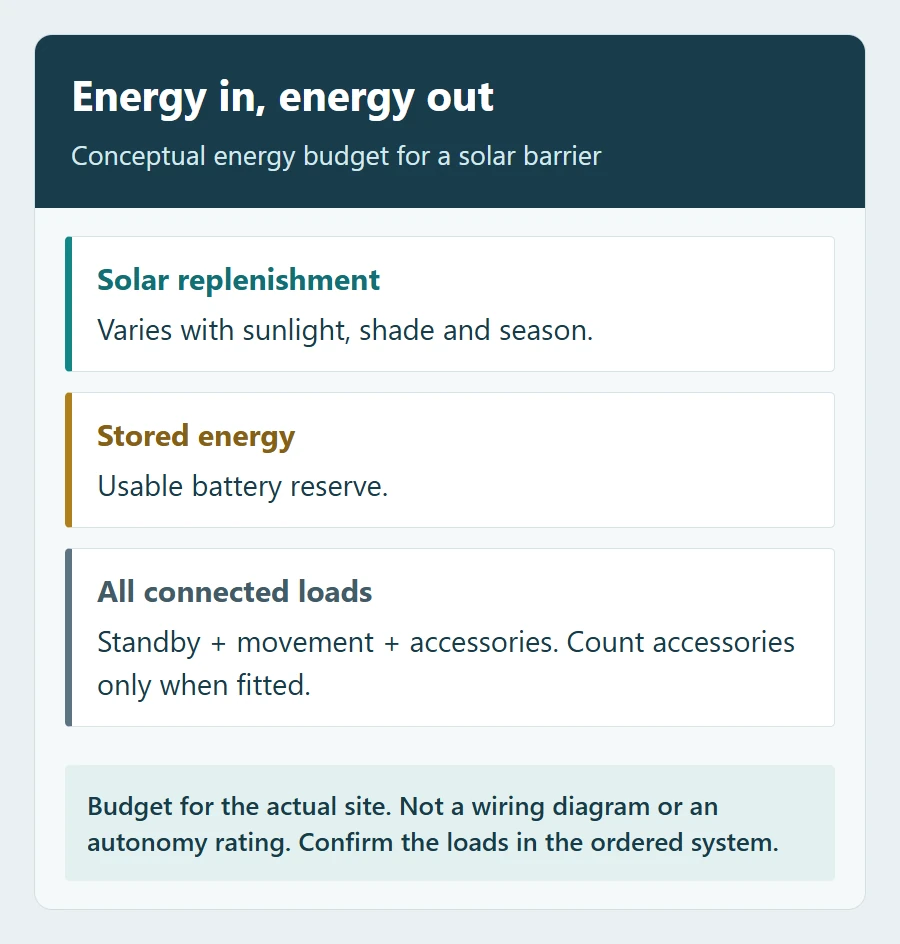
Include every device expected to draw power. An ANPR camera, vehicle detector, radio receiver, intercom, lighting or communications equipment may add demand even while the boom is stationary. Confirm which devices, if any, can be powered by the proposed solar configuration and which need a separate supply.
Solar power does not automatically provide plate recognition, network connectivity or compatibility with an existing parking platform. These are separate functions. Where integration is required, use the ANPR integration checklist to define the control and information interfaces as well as the power requirements.
Where a solar barrier gate is worth considering
The strongest reason to consider this product is a need for controlled vehicle access without a convenient mains connection. Candidate applications include:
- Rural and private access roads: an entrance may be far from an existing electrical supply.
- Temporary project entrances: access control may be needed before a permanent supply is available.
- Remote parking or property access points: bringing power to the barrier position may require additional civil work.
- Entrances where a new cable route is difficult: compare a solar configuration with the cost and disruption of the proposed mains installation.
These are potential applications, not a claim that one configuration fits every site. A heavily shaded entrance or a location with high continuous demand may need a different arrangement. Describe both the busiest traffic period and the quiet periods when the equipment remains powered.
Prepare the site before installation
“No mains connection” describes the power approach. It does not remove the need for a suitable foundation, a clear boom movement area, drainage, safe vehicle and pedestrian routes, or the installation measures required by the equipment instructions and local project requirements.
Agree the access method, vehicle detection and protective functions for the proposed configuration. Confirm how the site will handle low energy, a fault or an interruption in access. The installer should demonstrate the agreed response without bypassing protective devices or forcing the barrier to continue after an abnormal condition.
For ongoing use, arrange access for panel inspection and cleaning, review shading as the site changes, and follow the supplied battery and equipment maintenance instructions. Use the specified service procedure rather than assuming that solar power means maintenance-free operation.
Discuss your solar barrier configuration with SHUNJIE
Send the project country and location, entrance photographs, required arm length, daily complete cycles and busiest operating period. Also list shaded periods, planned accessories, the access method and the operating arrangement needed during low-energy conditions.
Ask SHUNJIE to identify the proposed solar barrier configuration, its arm and speed settings, the included power and storage equipment, accessory supply limits and the supporting installation documents. This keeps the product’s full-charge cycle figure connected to the system you will actually order.
Planning an entrance without mains power? Contact SHUNJIE about the solar barrier gate with your site details to discuss the appropriate configuration.
Featured image: User-supplied product view showing the solar-panel-covered cabinet and closed boom.
Featured image: User-supplied product view showing the solar-panel-covered cabinet and closed boom.