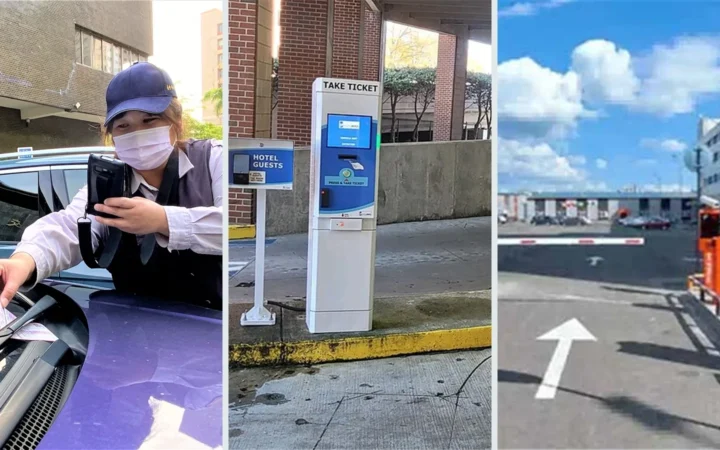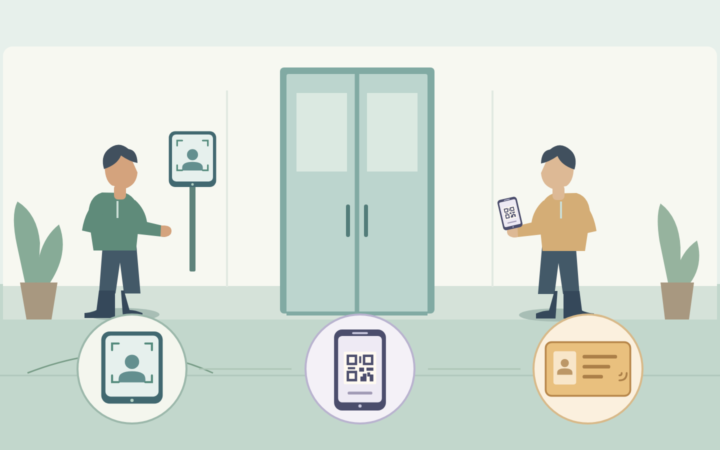
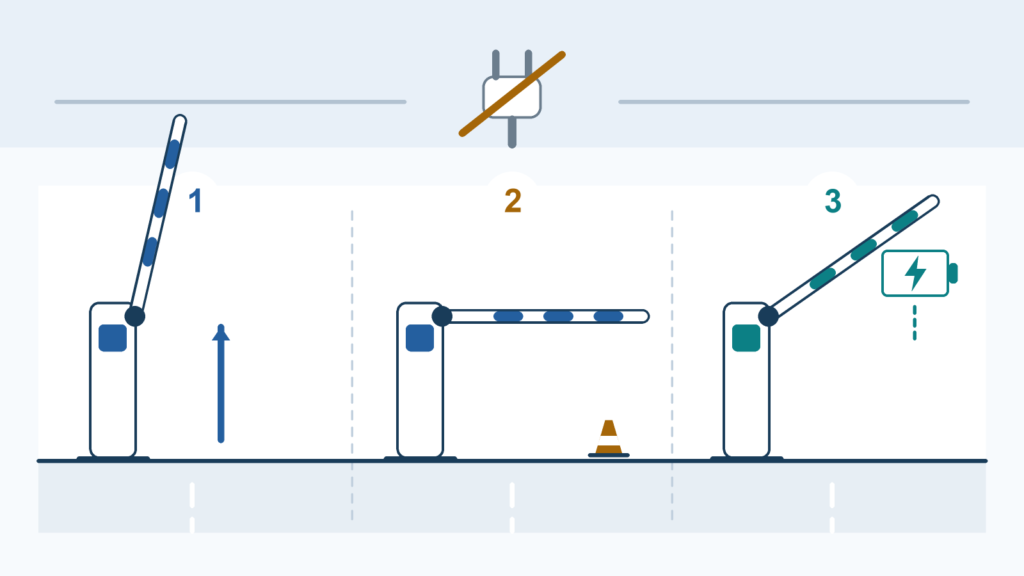
A power cut does not make every parking barrier open automatically. Depending on the model and installation, the arm may rise, remain in place, need an authorised manual release, or keep operating from a battery or other backup supply. The first job is to identify the actual barrier’s behaviour and give drivers a clear, safe way to leave.
There is a second question: what else has lost power? A working barrier motor is not enough for normal automatic number plate recognition (ANPR) parking if the camera, vehicle detector, controller, network, parking software or payment equipment has stopped. A useful outage plan covers the complete exit process, not just the moving arm.
This guide explains the immediate response, the main equipment dependencies, how to plan backup power, and what to check before reopening normal service. It is a planning guide for operators and integrators; the manual-release and electrical procedures must come from the exact equipment manual and the responsible installer.
What should happen in the first few minutes?
If you are a driver waiting to leave
Stop at the marked position and use the help point or contact number shown at the exit. If an attendant is directing traffic, follow that instruction. Keep your ticket or booking reference and any payment confirmation available; an outage can prevent the exit system from finding them immediately.
Do not drive under a partly raised arm, follow another vehicle through, lift the boom yourself or open the barrier cabinet. A stopped arm can move when power returns or when stored mechanical energy is released. If the help point is also off, use the displayed alternative contact method rather than assuming there is no one managing the site.
If you operate the car park
- Take control of the affected lane. Pause new entries if the exit or its protection cannot be managed safely. Prevent a queue from entering the arm’s movement area and keep the pedestrian route separate.
- Find out what has failed. Is the whole site without mains power, or only one circuit, cabinet, network switch or payment device? Check through the responsible staff without exposing live parts.
- Put the agreed exit arrangement into effect. That may be controlled operation on backup power, an installer-approved manual release, or a designated alternative exit. Do not improvise a release method from another model.
- Tell drivers what to do. Make assistance, any payment review and the route out clear. Record exceptional releases so unfinished visits can be resolved after recovery.
Public-road traffic management, emergency-service access and any required evacuation route need their own approved arrangements. A parking boom should not be treated as a substitute for the site’s wider emergency plan.
Will the arm rise, stay down or keep working?
The answer is model- and configuration-specific. “Automatic opening on power failure,” “manual release” and “battery backup” describe different capabilities. They should not be used interchangeably.
| Documented behaviour | What it means in practice | What still needs checking |
|---|---|---|
| Automatic rise on supply loss | The specified arrangement raises the arm when the relevant supply fails. | Which supply loss triggers it, the required settings or mechanism, and what happens when power returns. |
| Arm remains in position | A mains failure does not itself provide a usable open exit. | The approved assistance route, any manual-release procedure and who can carry it out. |
| Manual release is available | A designated person can use the exact model’s documented release procedure under the required safety conditions. | Access to the correct instructions and release equipment, isolation, mechanical hazards and safe reinstatement. |
| Operation continues on backup power | The connected equipment can run for the agreed limited period or operating duty. | Battery condition, motor starting demand, supported devices, protective functions and the response when reserve power is low. |
“Fail-open” is often used to mean that a loss of the relevant power or control condition produces an open passage. It does not mean every failed component will make the arm rise, or that recognition and payment will continue. Ask for the exact behaviour rather than relying on the label.
Even within a product family, an option, control board, boom arrangement or setting can change the result. SHUNJIE’s current DJZ-07 specifications, for example, list a power-failure boom-raise function. That is a model-specific statement, not a promise for the whole barrier-gate range. The page does not establish the detailed trigger, mechanism or restart sequence; confirm the ordered configuration, manual and actual site behaviour.
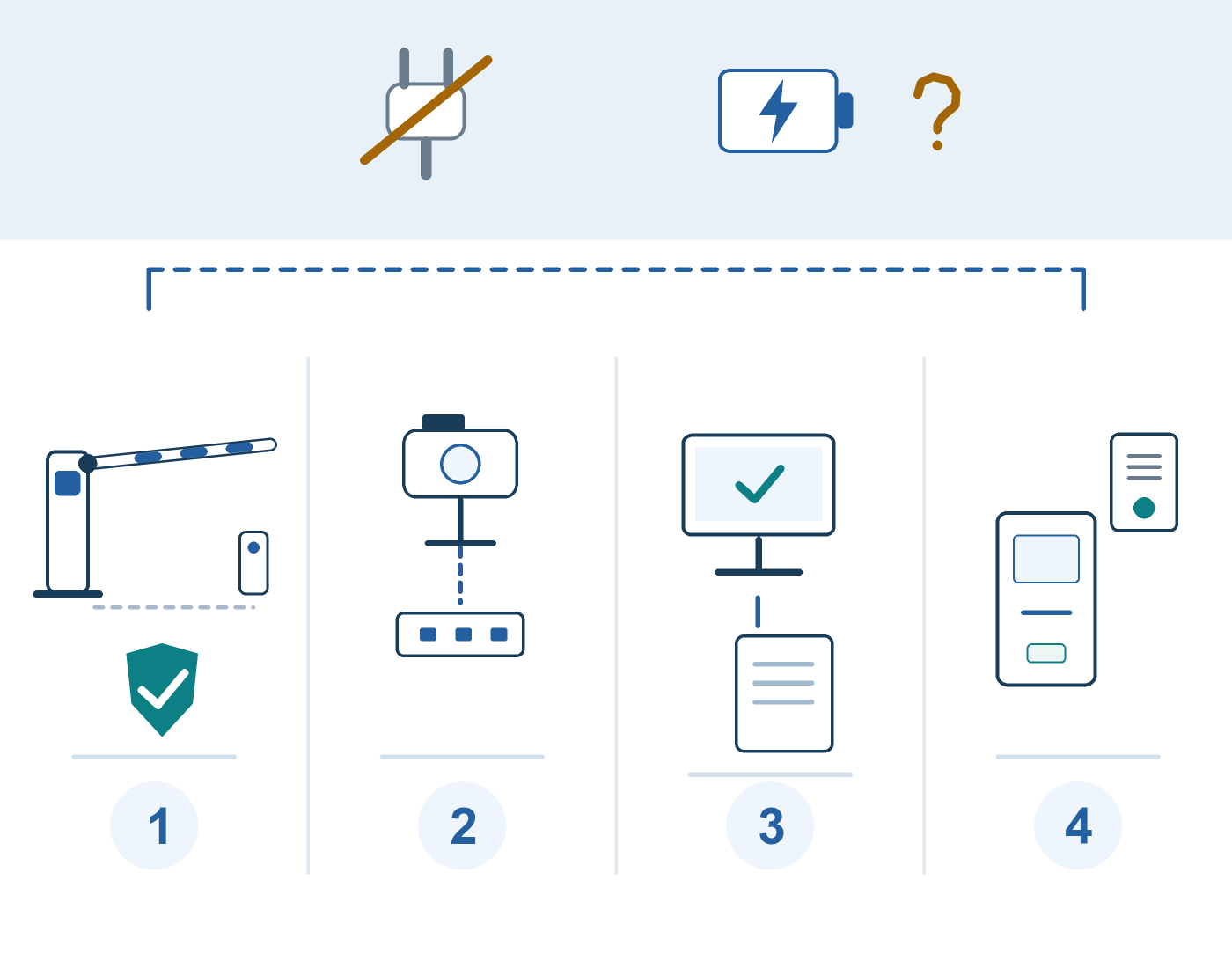
Which equipment needs power for a normal exit?
Think of the exit as a chain. The system identifies the visit, checks permission or payment, sends a command, moves the arm and detects the vehicle’s passage. Losing one powered link may stop the chain even when the others still work.
| Equipment or function | What a power loss can affect | Question for the backup plan |
|---|---|---|
| Barrier motor, control board and required protection | Movement, command handling, vehicle presence detection and the agreed protective response. | Can the selected supply support the complete configured barrier system, not just its motor? |
| ANPR camera, reader or display terminal | Plate reading, alternative credentials and instructions to the driver. | Which device identifies the visit during an outage, and how is it powered? |
| Network switch, PoE supply, router and required links | Communication, and camera power where Power over Ethernet is used. | Do the devices and the connections needed for an access decision all remain available? |
| Parking controller, host or remote service connection | Permission decisions, visit searches, local records and management access. | Where does the decision happen, and which local or external dependencies remain? |
| Payment, help point and operating support | Order confirmation, assistance and the driver’s ability to resolve a problem. | What payment and assistance route will work if the normal equipment is off? |
Example: the barrier is on a backup supply, but the camera receives PoE from an unprotected switch. When the mains fails, the camera also loses power. The motor may still be able to move, but automatic plate-based exit is no longer a complete working route.
The same distinction applies to software. Keeping a local parking host powered does not keep every cloud service, payment connection or internet link available. Confirm the actual recognition-to-barrier interfaces and dependencies for your installation.
Decide what the backup is supposed to achieve
Goal 1: provide an agreed route out
A site may prioritise getting vehicles out under controlled conditions and pausing normal entries. The plan might provide power for the required opening action, or use an approved manual or alternative-exit arrangement. That is different from promising normal automatic parking operation throughout the outage.
Agree who controls the route, how the open position or other passage arrangement is maintained, what protection is required and how unfinished fees or visit records will be handled. A single opening does not by itself establish a safe, permanently available exit.
Goal 2: continue normal service for a limited time
Then the backup needs to support the devices and connections required for recognition, decisions, protection, payment and assistance, as applicable. The operating duty also matters: a quiet residential exit and a busy commercial lane can require very different numbers of motor movements during the same hour.
Set a point at which staff switch from normal service to the agreed controlled-exit or shutdown arrangement. Do not wait until the reserve supply stops unexpectedly with vehicles already committed to the lane.
Goal 3: stop service in an orderly way
Some sites use backup power mainly to keep records available, complete an agreed action and shut equipment down properly. For a longer outage, a generator or another approved supply may be part of the site design. Its changeover, compatibility and electrical installation belong to the responsible qualified team.
Choose the goal before choosing the battery or UPS. Otherwise, suppliers can quote for different outcomes while appearing to offer the same “backup power” feature.
How should a UPS or battery backup be specified?
A UPS, or uninterruptible power supply, provides backup energy when its normal input is unavailable. Its suitability depends on both the connected load and how long that load must run. A manufacturer-approved battery option inside a barrier is another arrangement; it should not be assumed to power separate network or payment equipment.
Power capacity and running time are different questions
Watts (W) describe real power use. Volt-amperes (VA) are another output-capacity rating used for AC equipment. A UPS must meet its applicable W and VA limits as well as the equipment’s operating requirements. Watt-hours (Wh) describe energy, so they help explain duration but do not by themselves establish motor-starting capability.
For a simple illustration, an electronics load drawing 80 W for two hours uses 160 Wh before conversion losses or reserve allowances. This arithmetic is not a UPS recommendation. It says nothing about whether that supply can start a barrier motor, support a short peak or provide the required transfer behaviour.
Ask the installer and backup-supply manufacturer to check:
- The full load: the actual devices, their supply requirements and the equipment that is easily missed, such as a PoE switch or intercom.
- Standby, movement and starting demand: a motor’s quoted rated power is not a complete record of every transient or operating condition.
- Compatibility: the required voltage, frequency, output characteristics, changeover behaviour and approved use with the controller and motor.
- Duty and duration: how long the outage plan should work and how many barrier cycles it must support during that period.
- Battery condition and environment: maintenance, ageing, temperature and the manufacturer’s limits.
Use the manufacturer’s runtime information for the actual load and configuration, then verify the agreed duty in a controlled commissioning test. Do not size the whole lane from a motor-watt figure, a battery’s ampere-hour label or the largest VA number on a product box.
Schneider Electric’s UPS runtime guidance (English) directs users to the load/runtime graph for the particular UPS model. This is why a general “one hour of backup” claim needs the actual load and equipment details.
Example: two operators each request “one hour of backup.” One needs an attended route out with no new entries; the other expects repeated automatic entry and paid exit. They need to specify those different functions and movement duties before comparing equipment or runtime claims.
What if there is no working backup supply?
Use the model’s approved assisted-exit arrangement, not a generic method of lifting the arm. Depending on the equipment, this may involve a documented manual-release procedure or a different controlled exit. Operators should know who is authorised and trained, where the correct instructions are kept and when the installer must attend.
Manual release is not necessarily the same as simply pushing the boom up. Power can return, a backup source can still be connected, and springs or other mechanisms can contain stored energy. The responsible person must follow the manual’s isolation, restraint and reinstatement requirements. Do not copy instructions from a similar-looking cabinet or defeat protective inputs to make the arm move.
The UK Health and Safety Executive’s machinery-maintenance guidance (English) also addresses secure isolation and stored energy. Treat it as a safety reference alongside the exact equipment instructions and the requirements that apply to the site.
While staff manage the lane, explain the route to drivers and avoid mixing pedestrians with moving vehicles. Where normal payment or visit verification is unavailable, use the operator’s approved exception policy and keep an appropriate record of the decision. A power cut does not automatically determine that parking is free or authorise staff to alter charges without that policy.
If there is no safe approved way to use the affected exit, keep that lane out of service and activate the site’s alternative-access or emergency arrangements. The situation needs an authorised response, not a driver improvising a way past the equipment.
When power returns, how should normal operation restart?
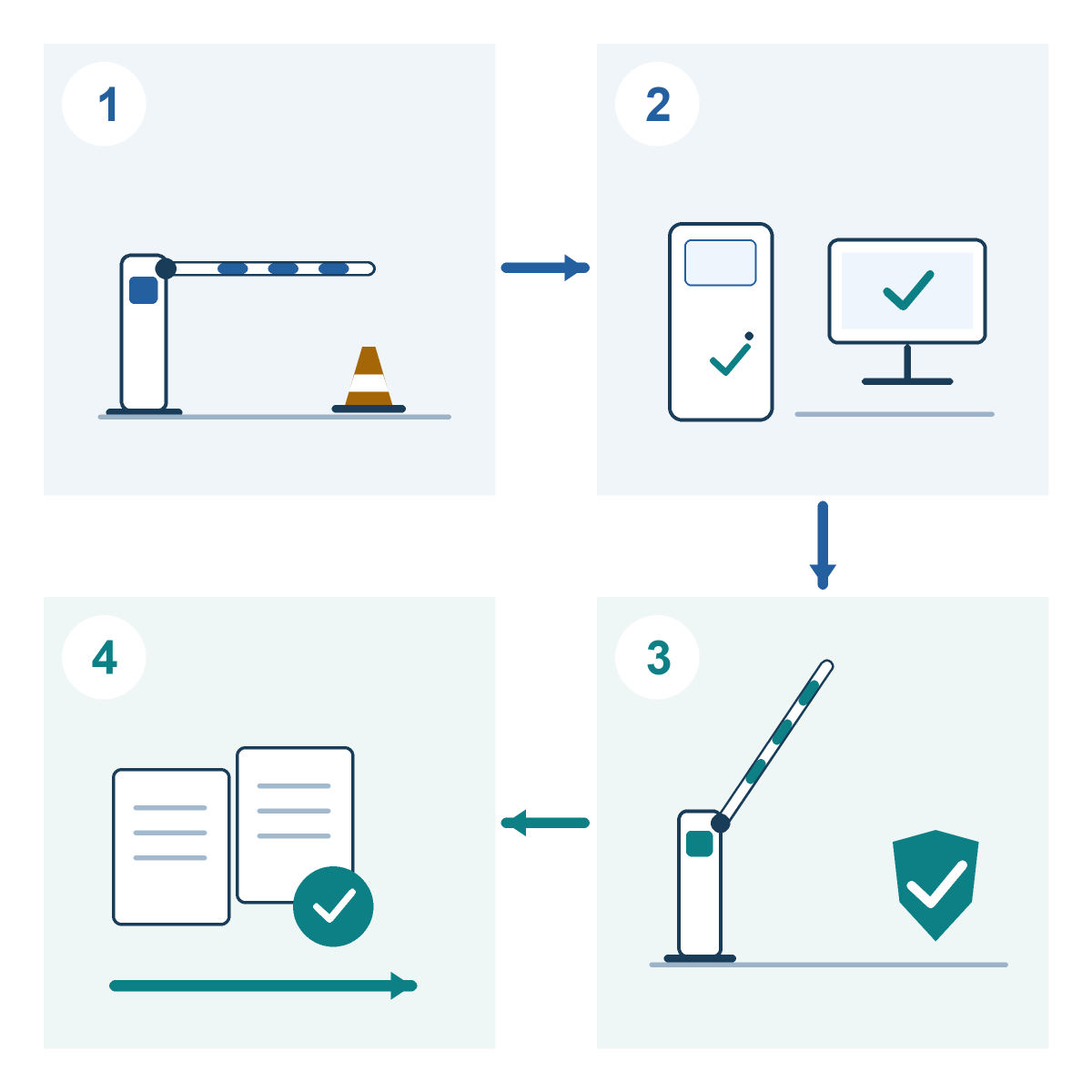
Restored electricity is the start of recovery, not proof that the lane is ready. Staff should control traffic while the responsible team follows the equipment-specific restart procedure. Automatic closing or a return from manual operation can create a new hazard if people assume the arm will stay where it was.
- Check the physical lane. Keep people and vehicles clear of the movement area. Deal with obvious damage, flooding or another unsafe condition through the responsible team before energising affected equipment.
- Confirm the barrier’s operating state. Where manual release was used, follow the exact reinstatement procedure. Confirm the intended mode and any automatic movement before giving the lane back to drivers.
- Restore the required supporting equipment. Check detectors, cameras, readers, network, controller, management host and assistance. Use the prescribed equipment sequence; there is no universal switch-on order for every installation.
- Check the parking information. Verify the relevant time settings, permissions and outstanding visits. Review assisted openings and any payment status that could not be confirmed during the outage, avoiding duplicate charges or unexplained active visits.
- Test the complete route and monitor it. In a controlled lane, verify the agreed command, movement, protection and recording outcomes before returning to normal traffic. Check the backup supply’s condition and recharge state as well.
A short second power interruption can arrive before the battery has recovered from the first one. Record whether the site is ready for another outage or needs a temporary restricted operating plan.
Other questions worth settling before an outage
Does a solar barrier keep working indefinitely without mains power?
No. A solar arrangement still depends on its battery state, available charging, operating duty and accessory loads. It can suit a planned off-grid installation, but it is not an unlimited-energy promise or a substitute for an outage procedure. Check the actual solar configuration and its stated conditions.
If the arm is open, do recognition and payment still matter?
They may still matter for visit records, fees, security and recovery, even when the operator has authorised a controlled open route. Agree which functions continue and how exceptions are recorded. Do not describe “the boom is up” as proof that the whole parking system is operating normally.
Can the site prove this with an internet-disconnection test?
No. Losing the internet while local devices remain powered is different from losing electrical supply. Test the agreed power-failure case separately, with controlled lane conditions and responsible staff. The procedure should cover the intended barrier behaviour, supporting equipment, assisted exit and return to service.
What information should you send when planning the equipment?
Share the selected barrier model and boom, a list of connected equipment, the existing power and network arrangement, expected traffic during an outage, the required duration and the intended exit policy. Ask for the exact failure response, compatible backup options, manual-release instructions and recovery requirements for that configuration.
SHUNJIE can discuss the barrier equipment and parking-management connections for the project. Backup selection, local electrical work and operating responsibilities should be agreed with the relevant suppliers and installer. The goal is a clearly understood route for vehicles to leave, with an equipment and recovery plan that supports it.
Featured image: Illustration of different configured responses to a power cut, not three modes available on every model. Confirm the actual equipment and the site’s approved exit arrangement.