Choosing an LPR parking supplier in Malaysia involves more than comparing camera specifications. A condominium, hospital, shopping centre and outsourced car park need different access rules, payment arrangements and support. This article compares six candidates: MAG, AMANO Malaysia, TimeTec, Park Rite, IPSEC and Shunjie Barrier.
“Top 6” describes an editorial shortlist, not an independently tested ranking or market-share survey. Five candidates have a Malaysian business presence; Shunjie is a China-based manufacturer and the publisher of this article. Inclusion does not establish local installation coverage, product compatibility or performance for your site.
How to use this comparison
Official company and product pages establish broad service scope. They do not establish that every feature is included in a quotation. The profiles distinguish equipment supply, software, integration and parking operations so buyers can request comparable proposals. Confirm the current contracting company, available models and local service arrangements before ordering.
At-a-glance supplier comparison
| Company | Published scope | Question to resolve |
|---|---|---|
| MAG | Malaysia-based access products, LPR and barrier-related equipment | Which plate formats, visitor rules and guardhouse functions are included? |
| AMANO Malaysia | Parking management, LPR and payment-related systems | Which payment services, licences and maintenance arrangements apply? |
| TimeTec | Smart parking software, LPR, season parking and payment workflows | How do cloud, site devices and offline operation work together? |
| Park Rite | Parking management and operations with ANPR and other technologies | Who operates the car park and handles driver assistance? |
| IPSEC | Engineering and security integration, including ANPR/LPR | Who owns the interfaces between parking and other building systems? |
| Shunjie Barrier | China-based parking and access equipment manufacturer | Who provides Malaysian installation, commissioning and ongoing service? |
Six company profiles
1. MAG
MAG’s official LPR parking page presents a system with a recognition camera, barrier, display, mounting hardware and management software. Its residential materials also connect LPR with entrance control. This makes the company relevant to buyers evaluating a coordinated access package for condominiums, guarded communities or commercial entrances.
Ask for a demonstration using the plates and lane layout the site actually handles. Confirm resident registration, visitor approval, guard review and the procedure for an unreadable plate. A camera reading a registration number does not prove the vehicle’s identity or detect every cloned plate. Compare the supplied software functions and integration responsibilities rather than assuming every advertised access feature is standard.
2. AMANO Malaysia
AMANO Malaysia’s LPR offering sits within a broader parking-management and payment range. Its official materials describe season and casual parking, management software and cashless options. Buyers of office, retail, hospital or other organised car parks can use that scope to discuss a complete entry-to-payment workflow.
Request a precise list of payment providers and access methods in the proposed package. Confirm who provides the merchant account, reconciliation, refunds, software hosting and maintenance. Published accuracy figures are not a substitute for acceptance tests: plate types, lighting, vehicle speed and the definition of a successful transaction must be agreed for the project.
3. TimeTec
TimeTec Parking publishes smart parking software, LPR, season parking and several payment workflows. Its software-led offering is relevant when an owner needs to manage parking rules and records across a property portfolio, subject to the selected platform and licence.
For a cloud-based proposal, establish which decisions remain available at the entrance if connectivity fails. Ask about synchronisation, tenant permissions, account administration, reporting and export of records. Payment methods shown on a website are options to confirm for the contracted service; they are not evidence that every device, bank or wallet is supported without additional integration.
4. Park Rite
Park Rite’s technology page lists ANPR, RFID, entry and exit equipment, cashless systems, analytics and remote assistance within its parking business. The important distinction is its operations offering: a property owner can discuss how the car park will be run as well as which equipment will be installed.
Separate equipment purchase from the management contract. Identify responsibility for driver enquiries, exceptions, revenue reconciliation, maintenance and escalation. The company advertises round-the-clock monitoring and assistance, but staffing, covered sites, response times and charges still need to be defined in the agreement. An operations proposal should also explain how performance and financial records will be reviewed.
5. IPSEC
IPSEC’s official LPR page describes indoor and outdoor ANPR/LPR and connections with visitor-management and recording systems. Its engineering and systems-integration scope is relevant when parking belongs to a wider building security or ELV project.
Make the interface boundaries explicit. Ask which party supplies cameras, servers, network work, barrier control and the visitor database, and who resolves faults spanning those components. Demonstrate the proposed camera and software on the actual lanes. Broad statements about difficult angles or plate variations do not establish unrestricted recognition under all conditions.
6. Shunjie Barrier
Shunjie Barrier, operated by Huizhou Shunjie Intelligent Equipment Co., Ltd., supplies parking and access equipment from China. Its role in this comparison is a manufacturer for equipment sourcing and discussions with distributors or integrators. It is not presented as a Malaysian parking operator.
For a Malaysian project, confirm the plate-recognition configuration, controller interface, software scope and any requested OEM work in writing. Agree who handles import requirements, installation, lane tuning, spare parts and on-site service. Factory supply does not itself provide a local service team, and international product positioning does not establish recognition coverage for every plate format. Send the project requirements to obtain a defined proposal.
Match the project to the procurement questions
The following scenarios are starting points for discussion, not awards to particular vendors. Invite candidates with the relevant scope to demonstrate the complete workflow.
| Project | Scope to compare | Evidence to request |
|---|---|---|
| Condominium or guarded community | Resident and visitor access, guard controls | Registration, guest approval and failed-read demonstration |
| Office building | Season permits, tenant rules and visitor charging | Permission controls and entry/exit exception handling |
| Shopping centre or mixed-use site | Casual payment, validation and operational reporting | Payment confirmation, refunds and reconciliation |
| Hospital or campus | Different user groups and assistance arrangements | Staff, visitor and emergency procedures tested on site |
| Managed car park | Equipment plus operating responsibilities | Service scope, escalation and auditable reports |
| Security or ELV project | Parking interfaces with wider building systems | Interface list and a named integration lead |
| Distributor or OEM supply | Hardware, agreed customisation and local delivery | Approved specification, samples and service responsibilities |
What to check before choosing
Start with a site survey: lane width, camera position, lighting, stopping position, peak traffic and vehicle mix. Agree acceptance criteria using representative day and night traffic, including unreadable plates and exceptions. Recognition, permission checking, payment and barrier movement are separate steps; a fast camera does not guarantee a fast complete transaction.
Check the whole integration chain. Obtain the supported model numbers, software versions, interfaces and recurring fees. Establish what happens during network or power loss and how authorised staff assist a driver. Vehicle recognition is not a personnel-protection device; barrier protection and pedestrian routes require their own suitable design.
Compare local service in practical terms: named installation responsibility, travel coverage, support hours, response targets, spare parts and escalation. A Malaysian address alone does not establish an on-site service commitment, and an overseas manufacturer needs a clear local delivery arrangement.
Agree data handling before deployment. Define the purpose of plate records, storage location, access permissions, retention and deletion, exports and audit logs under the applicable requirements. Ask which party controls the records and how data is returned when the contract ends. A cloud platform or privacy-policy link does not by itself settle those responsibilities.
Build a project-specific shortlist
MAG brings an access-equipment scope, AMANO Malaysia a parking and payment range, TimeTec software-led workflows, Park Rite operations, and IPSEC engineering integration. Shunjie adds a manufacturing-supply option with separate local delivery questions. These are differences in published scope, not proof that one company will outperform another.
Use proposals, demonstrations and a site-specific service agreement to narrow the list. Compare total scope and ongoing costs alongside equipment price. For Shunjie equipment, review the product range and provide lane drawings, plate formats, payment requirements and the intended installer when requesting a quotation.
Frequently asked questions
Are LPR and ANPR different in parking?
Vendors commonly use both terms for reading vehicle plates from images. Check the supplied workflow rather than relying on the label: recognition alone does not include authorisation, payment or complete parking management.
Which candidates should a condominium consider?
MAG and TimeTec publish access or smart-property parking workflows that make them candidates for discussion. Test resident changes, guest entry, guard assistance and exceptions before deciding whether a particular proposal fits.
What about malls, hospitals and large car parks?
AMANO Malaysia and TimeTec publish broader parking-management functions worth evaluating. Scale, integration and service must be demonstrated for the actual site; the company name alone does not establish capacity.
Who offers parking operations as well as technology?
Park Rite’s published scope includes parking operations. Confirm the responsibilities and commercial terms, including driver support, reconciliation and maintenance, instead of treating an equipment quotation as a management agreement.
Who can be considered for a wider ELV project?
IPSEC publishes engineering and systems-integration services alongside ANPR/LPR. Confirm the project interfaces and a responsible integration lead; equipment from different suppliers is not automatically compatible.
Why include Shunjie if it is based outside Malaysia?
Some buyers need manufacturer supply or agreed OEM work through a distributor or integrator. Shunjie is included for that procurement route, with its publisher relationship disclosed and local installation and service requiring separate confirmation.
Is a published accuracy percentage enough?
No. Ask how it was measured and run agreed site tests. Include false reads, missed reads, payment exceptions, assistance and complete entry/exit transactions, together with support and lifecycle costs.
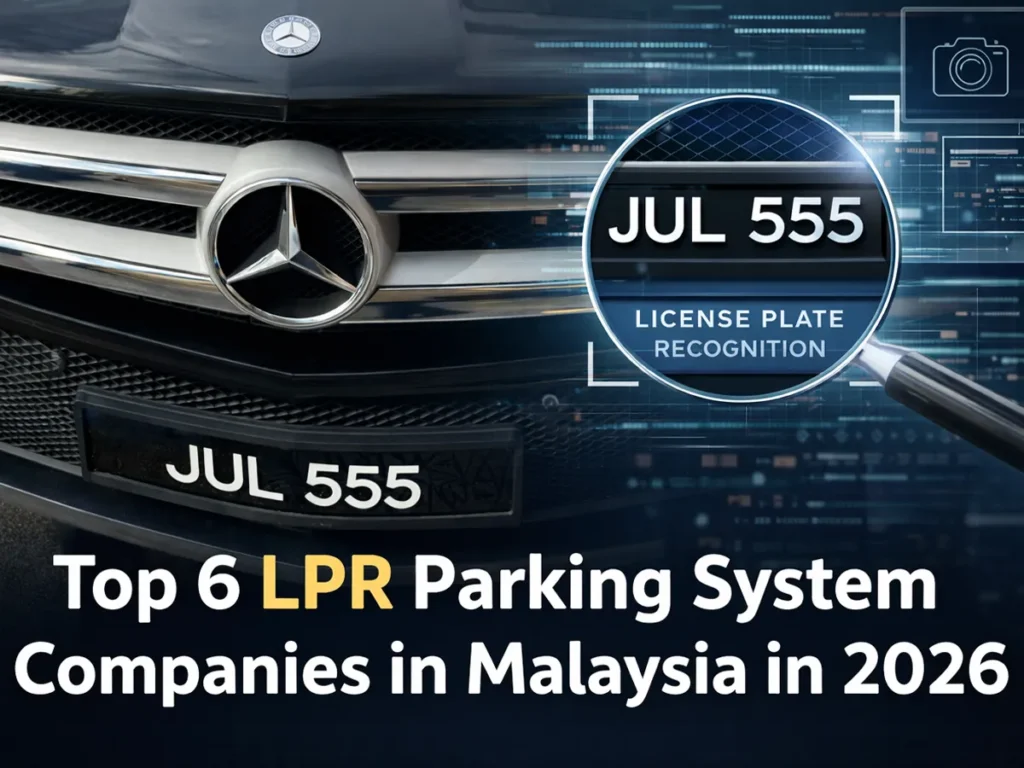
Featured image: Concept illustration for a six-company comparison, not evidence of an independently tested ranking.