
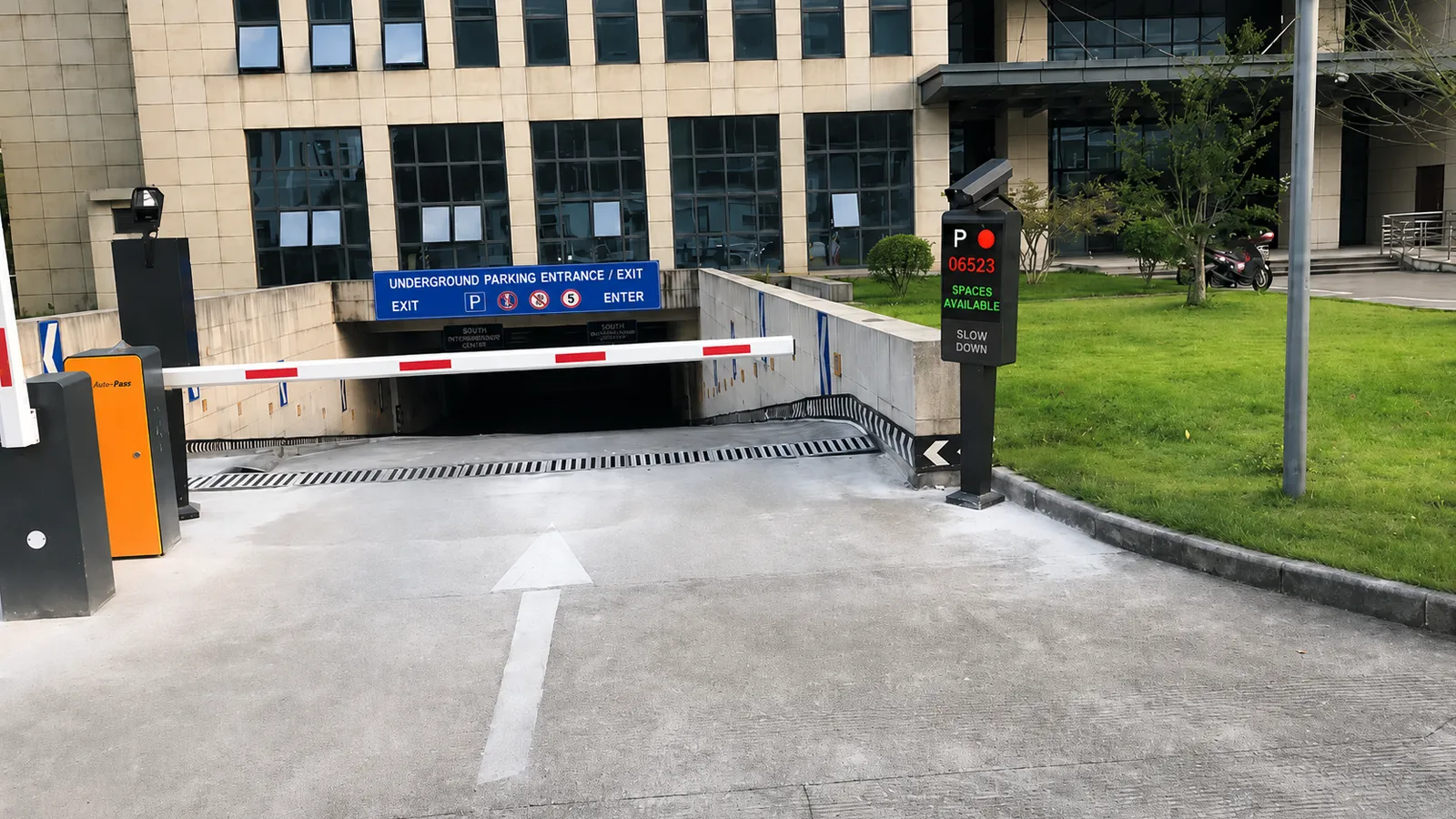
Every vehicle has a license plate. A License Plate Recognition (LPR) parking system uses that plate as a digital identity, helping parking lots manage entry, exit, payment, security, and vehicle records automatically.
Also known as ANPR, or Automatic Number Plate Recognition, LPR uses cameras and recognition software to capture a plate image and convert it into readable plate text. In parking management, this means the license plate can work like a virtual ticket, reducing the need for paper tickets, cards, or manual checking. ANPR systems commonly use cameras, infrared lighting, and OCR technology to read plate numbers from vehicle images.
For drivers, LPR makes parking faster and more convenient. For parking operators, it improves security, reduces disputes, supports cashless payment, and creates clear entry and exit records.
How Does a License Plate Recognition Parking System Work?
An LPR parking system usually works through four main steps: image capture, plate recognition, data matching, and access control.
1. The Camera Captures the License Plate
When a vehicle approaches the entrance or exit, an LPR camera captures the front or rear license plate. Many systems use infrared illumination to improve recognition in low-light conditions or at night.
Correct camera installation is very important. The camera angle, lane width, lighting, vehicle speed, and plate condition can all affect recognition performance.
2. The Software Reads the Plate Number
After the camera captures the image, the software detects the license plate area and converts the image into alphanumeric text using OCR technology. This allows the system to identify the vehicle without requiring the driver to take a ticket or scan a card.
3. The Plate Is Matched with Parking Records
The recognized plate number is then checked against the parking database. Depending on the project, the system can match the plate with:
- Entry time
- Exit time
- Payment status
- Monthly parking account
- Whitelist or blacklist
- Prepaid ticket
- Reservation record
- Visitor registration
LPR-based ticketless parking systems can link license plates with payment status, time, place, and access actions such as opening a gate.
4. The Barrier Opens or the Event Is Recorded
If the vehicle is authorized, the system can automatically open the barrier gate. If payment is required, the system calculates the parking duration and fee based on entry and exit records.
| Parking Stage | What Happens | Benefit for Drivers | Benefit for Operators |
|---|---|---|---|
| Entry | Camera captures the plate | No need to take a ticket | Entry time is recorded automatically |
| Parking | Plate is linked to parking record | Easier payment and exit | Better vehicle tracking |
| Payment | Driver pays by cashier, kiosk, app, or cashless method | More payment options | Fewer manual disputes |
| Exit | Plate is recognized again | Faster exit | Accurate fee and access control |
| Exception | Lost ticket or abnormal event | Easier verification | Clear record for checking |
Why Choose LPR for Parking Management?
Faster Entry and Exit
Traditional parking often requires drivers to stop, press a button, take a ticket, scan a card, or wait for manual checking. LPR reduces these steps by using the license plate as the vehicle’s access credential.
This is especially useful for high-traffic locations such as shopping malls, office buildings, hospitals, airports, residential communities, and public parking lots.
Better Security and Anti-Fraud Control
With LPR, the license plate can act as a virtual ticket. The system can match the vehicle’s plate at entry and exit, helping prevent ticket swapping and unauthorized vehicle movement.
Operators can also manage blacklists and whitelists. For example, a residential community can allow registered residents to enter automatically while blocking vehicles marked as unauthorized.
Easier Lost Ticket Handling
Lost tickets are a common problem in traditional parking lots. With LPR, operators can search the vehicle’s license plate record and confirm the actual entry time. This helps reduce disputes and improves trust between the driver and parking operator.
Ticketless parking systems can also help resolve payment disputes through recorded data rather than relying only on manual judgment.
Better Experience for Monthly and Contract Parking Users
For monthly parking users, LPR is simple and convenient. Once the vehicle plate is registered, the user can enter and exit without carrying a physical card or ticket.
This is useful for:
- Office employees
- Residential owners
- Hotel guests
- VIP customers
- Long-term parking users
- Fleet vehicles
More Flexible Payment and Integration Options
LPR can work with different parking payment methods, including cashier payment, self-service kiosks, prepaid tickets, mobile payment, and cashless systems.
For modern parking projects, LPR can also integrate with:
- Barrier gates
- Parking management software
- Access control systems
- Cloud platforms
- Reservation systems
- LED displays
- Intercom systems
- Third-party payment platforms
LPR Parking System vs Traditional Ticket Parking
| Comparison Point | LPR Parking System | Traditional Ticket Parking |
|---|---|---|
| Entry method | License plate recognition | Paper ticket, card, or manual control |
| User experience | Contactless and faster | Driver must take or scan ticket |
| Lost ticket issue | Entry record can be checked by plate | Usually requires manual handling |
| Anti-fraud ability | Plate and record can be matched | Ticket swapping may happen |
| Monthly parking | Plate can be used as access ID | Card or tag is usually required |
| Payment support | Can connect with cashless or prepaid systems | Depends on ticket system |
| Data record | Vehicle movement is easier to trace | Records may be less detailed |
| Upgrade flexibility | Can be added to many parking projects | Limited by existing system design |
Common Applications of LPR Parking Systems
Commercial Parking Lots
Shopping malls, supermarkets, office buildings, hotels, and hospitals need fast vehicle access and accurate fee calculation. LPR helps reduce congestion at entrances and exits while improving parking management efficiency.
Residential Communities
In residential communities, LPR can recognize registered vehicles and open the gate automatically. It can also help manage visitor vehicles, temporary vehicles, and restricted vehicles.
Public Parking Facilities
Public parking lots often need to handle many different users every day. LPR helps operators record vehicle movement, calculate parking time, and reduce manual checking.
Contract and Monthly Parking
For long-term users, LPR makes access smoother. The driver does not need to show a card or ticket. The system recognizes the plate and checks whether the account is valid.
Prepaid and Reservation Parking
LPR can also support prepaid parking and advance booking. A driver can reserve a parking space before arrival, and the system can recognize the plate when the vehicle reaches the entrance.
Existing Parking Lot Upgrades
One major advantage of LPR is that it can often be added to existing parking solutions. For example, a parking lot with barrier gates may upgrade by adding LPR cameras, software, and payment integration.
Before upgrading, operators should check the current barrier system, lane layout, network condition, camera position, lighting, and software compatibility.
What Should You Consider Before Choosing an LPR Parking System?
Recognition Accuracy
Accuracy depends on camera quality, software algorithm, lighting, installation angle, license plate condition, vehicle speed, and local plate formats. For international projects, the system should support different plate designs, fonts, colors, and country formats.
Huizhou Shunjie Technology Co., Ltd. provides LPR parking solutions supporting license plate recognition in more than 150 countries and regions, with recognition accuracy up to 99% under suitable installation and operating conditions.
Installation Environment
A good LPR project is not only about the camera. The site environment matters. Before installation, check:
- Is the lane straight enough for plate capture?
- Is the camera angle suitable?
- Is there strong backlight or glare?
- Will vehicles stop or slow down at the capture point?
- Is the plate clearly visible?
- Is the network connection stable?
Integration Requirements
Different parking projects need different integrations. A small residential gate may only need whitelist access control. A commercial parking lot may need fee calculation, online payment, LED display, and central management software.
OEM and Customization Support
For distributors, system integrators, and parking solution providers, OEM customization is often important. Customized logo, software interface, language, cabinet design, and integration protocol can help partners build a complete local solution.
Shunjie supports OEM customization and provides LPR parking products for multiple application scenarios, helping partners build high-performance and cost-effective parking systems.
Conclusion
A License Plate Recognition parking system uses the vehicle’s plate as a digital identity. It can replace or reduce paper tickets, improve entry and exit efficiency, support cashless payment, and give operators better control over vehicle access.
For drivers, LPR means a smoother and more convenient parking experience. For parking operators, it means stronger security, fewer disputes, easier monthly parking management, and better operational data.
As parking facilities continue to move toward automation and digital management, LPR is becoming one of the most practical technologies for safer, faster, and smarter parking.
FAQ
1. What does LPR mean in parking?
LPR means License Plate Recognition. In parking, it refers to a system that uses cameras and software to read vehicle license plates and manage entry, exit, payment, and access control.
2. Is LPR the same as ANPR?
Yes, in most parking applications, LPR and ANPR refer to the same type of technology. ANPR means Automatic Number Plate Recognition.
3. Can LPR parking work without paper tickets?
Yes. In a ticketless parking system, the license plate can act as the vehicle’s parking identity. The system records entry and exit time by plate number.
4. Can LPR be used for monthly parking?
Yes. Monthly users can register their license plates in the system. When the vehicle arrives, the system recognizes the plate and allows entry automatically if the account is valid.
5. What happens if the license plate is dirty or blocked?
If the plate is dirty, damaged, blocked, or poorly lit, recognition accuracy may be affected. A good system should allow manual checking or backup access methods for special cases.
6. Can LPR parking systems support cashless payment?
Yes. LPR systems can integrate with mobile payment, online payment, self-service kiosks, prepaid parking, or other cashless payment solutions.
7. Can LPR be installed in an existing parking lot?
In many cases, yes. LPR can often be retrofitted to existing parking lots, depending on the barrier gate, lane layout, software compatibility, and installation environment.
8. Where can LPR parking systems be used?
LPR parking systems can be used in shopping malls, office buildings, residential communities, hospitals, hotels, airports, schools, industrial parks, and public parking lots.