Choosing an LPR supplier for a U.S. parking, access-control or enforcement project starts with the operating task. A camera that reads plates, a mobile enforcement platform and a complete parking access and revenue control system are different purchases. This guide compares six companies from the existing article: Rekor, Genetec AutoVu, T2 Systems, gtechna, Amano McGann and ShunjieBarrier. Their offerings overlap, but they should not be treated as interchangeable packages.
ShunjieBarrier publishes this article and is one of the suppliers discussed. This is a supplier-authored buying guide, not an independent test, government ranking or complete market survey. The order below is for navigation, not a performance ranking. Official product pages were checked on November 3, 2026; available models, licences, integrations and local services must still be confirmed for your quotation.
The retained logos and website screenshots identify the respective brands and belong to their owners. They are existing reference illustrations, not evidence of endorsement, authorised partnership or today’s exact interface. The featured image’s older “Top 6” and year wording does not change this article into a ranked recommendation.
Quick comparison of the six suppliers
| Company | Offering to investigate | Important project question |
|---|---|---|
| Rekor | Scout recognition software, camera-based vehicle data and alerts | Which cameras, deployment plan and integrations are included? |
| Genetec AutoVu | Fixed/mobile ALPR within a unified security environment | Which hardware and Security Center functions does the project need? |
| T2 Systems | LPR connected to parking permits, sessions and enforcement | How will Flex or UPsafety connect to the existing parking workflow? |
| gtechna | Vehicle-mounted LPR and enforcement coordination | How are reads reviewed and shared with officers and permit systems? |
| Amano McGann | LPR integrated into parking access and revenue control | Which access, ticket and payment functions are in the proposed system? |
| ShunjieBarrier | ANPR cameras, barriers, terminals and project equipment supply | Who provides integration, local installation and ongoing service? |
This table summarises product scope and questions for procurement. It does not establish comparative accuracy, lowest cost or equal service coverage. Similar labels such as “cloud”, “integration” and “LPR” can refer to different editions, interfaces and responsibilities.
How this comparison should be used
The six names are retained from the earlier guide because their official sites describe LPR or LPR-integrated products relevant to these project types. Inclusion is not certification of financial strength, cybersecurity, legal compliance or local support. Company age, customer counts and marketing superlatives are not substitutes for checking the exact product and delivery team.
Build a shortlist around a written requirement and request comparable evidence from each supplier. Useful evidence includes a supported-hardware list, the software edition and licence terms, an interface specification, a representative site trial and the named service organisation. Ask the same questions of ShunjieBarrier as of every other company here.
1. Rekor
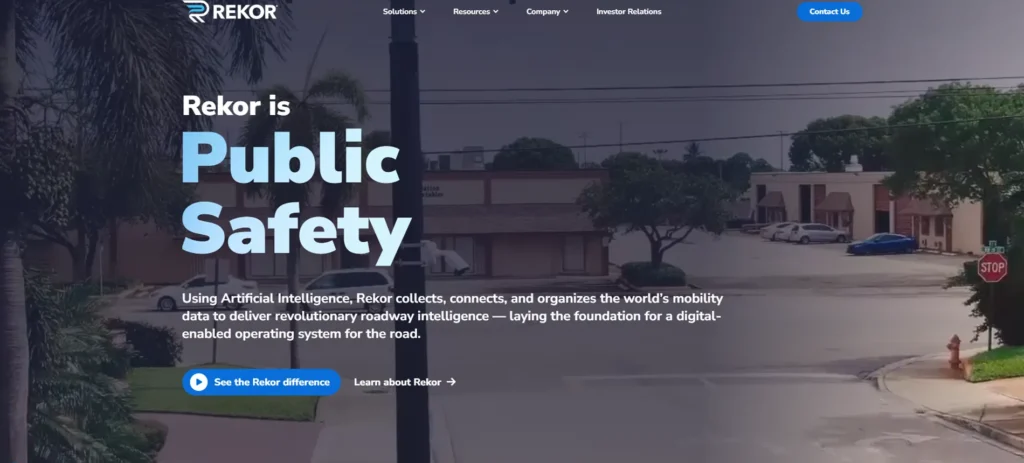
Rekor describes Scout as software for plate and vehicle recognition using camera feeds, with a web interface and cloud or on-premises options according to the plan. Its official page also describes searchable records, alerts, configurable retention and webhooks. These are product descriptions, not proof that any existing camera will provide suitable images at your entrance.
Consider this type of offering when the project needs recognition data or alerts within a broader workflow and already has, or plans to select, camera infrastructure. Before assuming reuse is economical, check the camera stream, image geometry, lighting, processing capacity, network and supported deployment. Include the cost of upgrading a camera or mounting position if the trial shows that it is necessary.
Clarify where recognition runs, where records are stored and which plan enables the required interfaces and retention. Ask how the software hands a permitted vehicle to the access controller and how operators handle an unread plate. A recognition-software subscription alone does not specify the barrier, protective devices, lane construction or local commissioning.
Rekor Scout — official product page
2. Genetec AutoVu
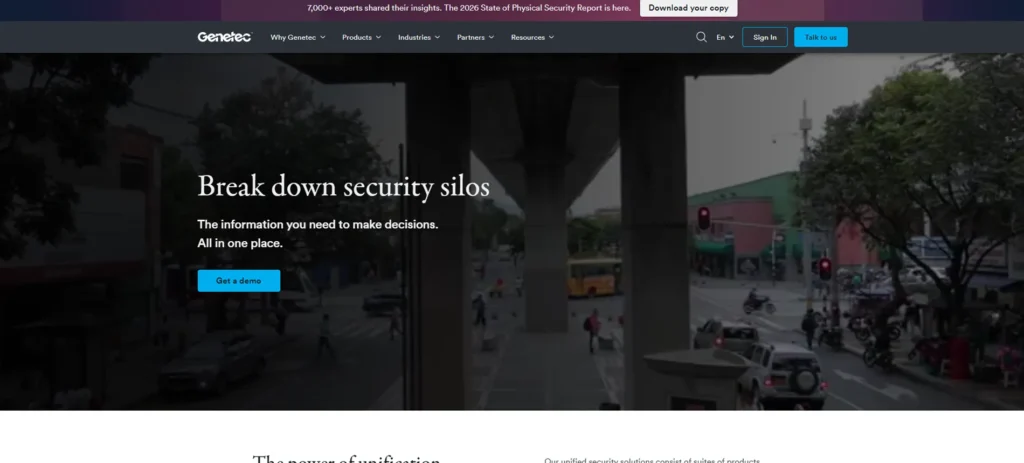
Genetec presents AutoVu as fixed and mobile ALPR that can work within its unified security environment alongside video and other systems. Its official materials cover parking management, corporate campuses and enforcement. This makes integration with the organisation’s security operations a useful subject to investigate, rather than a reason to declare it universally superior.
For a campus, venue or security-led property, map the plate event to the people who must use it. A guard may need associated video; a parking team may need permit status; an administrator may need reports and access permissions. Ask which of those functions are included in the specified version and which require additional software, devices or integration work.
Existing platform investment may influence the choice, but it does not remove the need for a site trial and clear responsibilities. Obtain the hardware and licence schedule, deployment architecture, training scope and service arrangements. A small parking-only project should compare the complete required configuration rather than assuming that a larger platform is either necessary or unsuitable.
Genetec AutoVu — official product page
3. T2 Systems
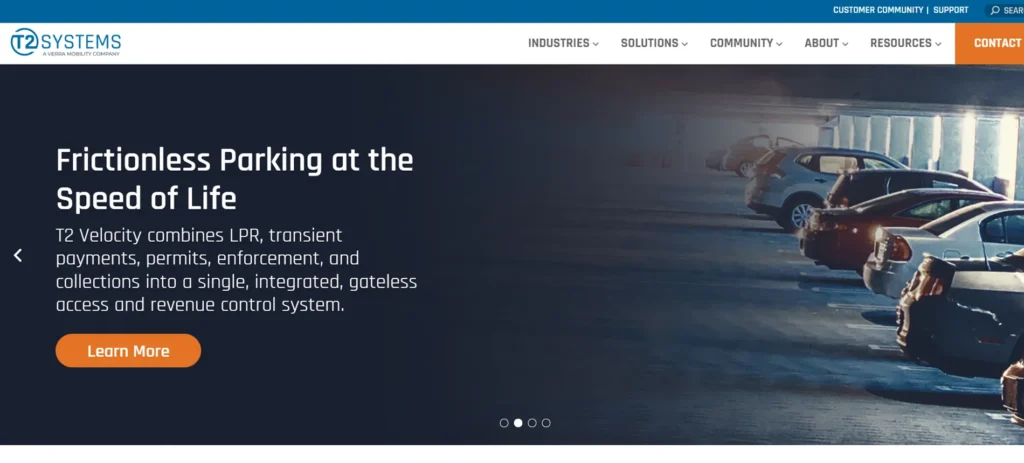
T2’s LPR page describes mobile, fixed and handheld deployments connected to T2 Flex or UPsafety. It links plate reads with paid parking sessions, valid permits and enforcement checks. The relevant distinction is the surrounding parking workflow: capturing a plate is only one step before determining whether a vehicle is entitled to park.
Universities, municipalities, healthcare sites and private operators can use that scope to frame their questions. Show the supplier how permits are issued, how payments arrive and how staff review exceptions. Ask for a demonstration of delayed payments, incorrect registration numbers, visitor permissions and the handover between a mobile patrol and office staff.
If another platform already manages payment or permits, confirm the specific supported integration, data ownership and synchronisation responsibilities. Do not infer universal compatibility from the word “integration”. Define how an enforcement decision is checked and corrected, and who handles disputes. Automated reads can assist staff; they do not remove the need for an appropriate review process.
T2 Systems LPR — official product page
4. gtechna
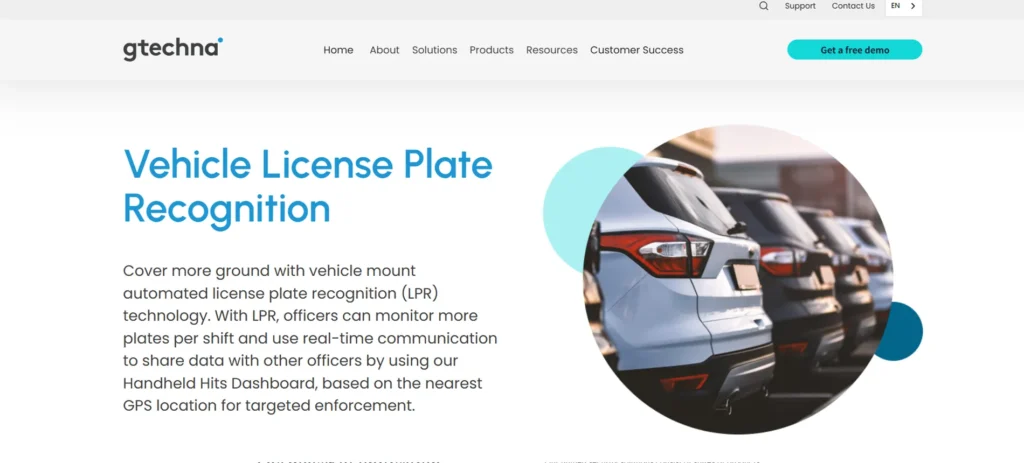
gtechna’s vehicle LPR page describes vehicle-mounted recognition and sharing information with officers through its Handheld Hits Dashboard. It also refers to connections with pay-by-plate and digital-permit functions. This is relevant to enforcement coordination and patrol workflows; it should not be assumed to include a complete barrier-controlled entrance.
For a city or parking authority, examine how a read becomes a reviewable event. Ask about location information, permit and payment updates, duplicate events and the evidence available to staff. A practical demonstration should show both normal processing and correction of a mistaken or uncertain read, rather than only the speed of scanning parked vehicles.
Confirm the devices, modules, hosting and support included in the proposal. Where information is shared between teams, document authorised access and the scope of that sharing. Procurement credentials or brand recognition do not by themselves establish that a particular deployment meets your organisation’s requirements. A private garage focused on entry and payment should separately verify those lane functions.
gtechna Vehicle LPR — official product page
5. Amano McGann
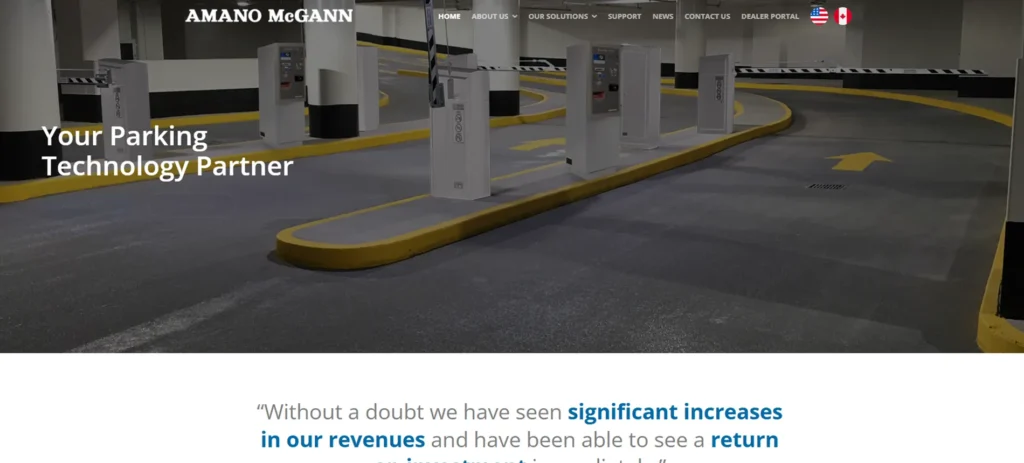
Amano McGann describes LPR as an option within its parking access and revenue control offering. Its contactless-solutions page discusses using a registered plate as an access credential and linking a plate to a transient ticket, including an exit workflow after payment. It also presents other access and payment methods, which should be checked against the selected system.
This scope is useful for a garage or parking operator comparing ticketless, ticket-based or mixed workflows. Follow a complete parking visit in the proposed demonstration: arrival, credential or ticket, payment, validation where required, and exit. Include a missing or unread plate, a lost ticket and a payment exception so the operator understands the fallback process.
Request the exact product family, compatible LPR components, payment connections and service provider for your location. A broad company network does not by itself promise a particular response time or include all maintenance in the purchase price. If only recognition software is needed, determine which surrounding parking equipment and software the proposed function depends on.
Amano McGann — official contactless-solutions page
6. ShunjieBarrier
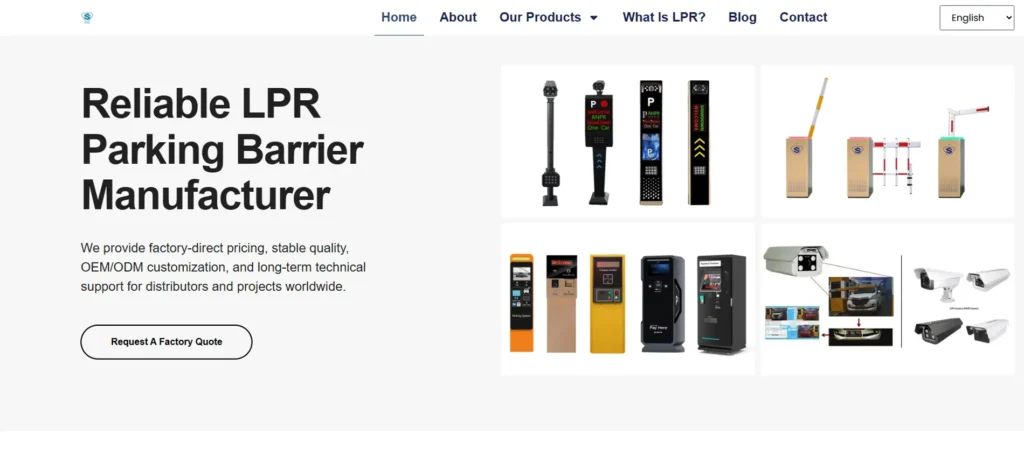
ShunjieBarrier is the publisher of this guide and a manufacturer supplying entrance-control equipment to trading companies, distributors and project partners. Its current range includes ANPR cameras, vehicle barriers, recognition and display terminals, ticket/payment equipment and parking management products. The relevant offer is equipment selection and project coordination; the exact supplied configuration must be written into the order.
For a distributor, integrator or buyer considering customised equipment, discuss the required plate formats, interfaces, enclosure or branding changes and software functions. Request confirmation for the particular models and destination. Neither a global-market statement nor a sample screenshot proves every U.S. plate format, payment integration or installation requirement is supported without adaptation.
U.S. buyers should identify who performs site design, installation, commissioning, warranty handling and on-site service. Agree what the factory supplies and what a local project partner supplies, including documentation, spares and remote assistance. This guide does not establish a nationwide U.S. service network, guaranteed lowest price or independently tested recognition rate for ShunjieBarrier.
Match the shortlist to the operating model
The following associations are editorial interpretations of the documented product scope, not exclusive recommendations. Several suppliers may serve the same project, and an integrator may combine products. Start with the workflow and evaluate the complete proposal rather than selecting a logo first.
| Operating need | Offerings to investigate | Evidence to request |
|---|---|---|
| Security and parking information in one environment | Genetec AutoVu | Actual platform, camera and access-system integration |
| Permits, paid sessions and parking enforcement | T2 Systems; gtechna | Current data exchange, staff review and exception workflow |
| Garage access, tickets and revenue control | Amano McGann; relevant integrated proposals | Complete entry-to-payment-to-exit demonstration |
| Recognition using selected camera infrastructure | Rekor Scout | Supported feeds, processing, hosting and a site trial |
| Equipment supply and project-specific configuration | ShunjieBarrier; qualified local integration partners | Model-specific scope, interfaces and service responsibilities |
What to verify before choosing an LPR supplier
Deployment and measurable acceptance
Specify fixed lanes, mobile patrols or handheld use; the expected vehicles and plate formats; operating hours; and difficult lighting or weather conditions. Agree a representative trial and how successful reads, unread plates and incorrect reads will be counted. A headline recognition percentage is not comparable unless the test conditions and denominator are clear.
Integration and exceptions
List the permit, payment, access and reporting systems that must exchange information. Confirm versions, documented interfaces, licence costs and who maintains the connection. Demonstrate an unknown plate, a network interruption, a payment mismatch and a manual correction. A plate read is an input to the workflow, not proof of payment or safe clearance beneath a barrier.
Support, data and total cost
Obtain a written division of responsibility for installation, training, software updates, spare parts and faults. Identify storage locations, access controls, retention and deletion settings, and have the responsible project team review applicable requirements. Compare hardware, recurring software, integration, civil work and ongoing service over the same period; do not compare a camera price with a complete operating system.
Choosing a supplier without a universal ranking
These six companies offer different routes into LPR-based operations. A security platform, an enforcement workflow, a PARCS installation and a manufacturer-supplied equipment package each answer different needs. Use the official links to check scope, then ask shortlisted providers to demonstrate the same realistic scenarios and state the same delivery responsibilities.
Make the final decision from documented fit, trial results, contractual scope and the service arrangement for your site. No company is established here as the safest, cheapest or most accurate overall. For ShunjieBarrier enquiries, bring the lane plan, target plate examples and required connections so the proposed equipment and responsibilities can be assessed concretely.
FAQ
What is the difference between LPR, ALPR and ANPR?
In parking and vehicle access, these terms usually describe camera capture and software recognition of a registration plate. Naming varies by region and product. The useful comparison is what data and workflow the proposed system actually supplies.
Which suppliers should be considered for parking enforcement?
T2 Systems and gtechna explicitly describe enforcement workflows; Genetec also documents parking enforcement applications. Compare the required permits, payment updates, staff review and deployment methods rather than claiming one is universally strongest.
Which supplier fits a gated parking lot or garage?
Amano McGann documents LPR within parking access and revenue control. Other integrated proposals, including Genetec-based or ShunjieBarrier equipment projects, may be relevant depending on scope. Verify the complete lane, payment, protection and support arrangement.
Are all six companies headquartered in the United States?
No. This guide discusses offerings a U.S. buyer may investigate, not a list restricted to U.S.-headquartered manufacturers. Confirm the contracting entity, delivery route and local service arrangements for each proposal.
Can a manufacturer-direct supplier suit U.S. buyers?
It can, particularly when the buyer or integrator can manage equipment selection and local delivery. Check model suitability, interfaces, installation, commissioning, warranty and spare-parts responsibilities before ordering; direct supply does not automatically mean a turnkey local service.
Which matters more: recognition accuracy or integration?
Both need acceptance criteria. Correct reads are useful only if the system applies the appropriate permit, payment or access rule, while good integration cannot correct unsuitable images by itself. Test both normal visits and exceptions.
How much local support should a buyer expect?
Expect only what the proposal and service agreement specify. Confirm the named installer, service area, contact process, response arrangements and exclusions for every supplier. A brand’s general network statement is not a site-specific service commitment.
Can one platform handle parking, access and enforcement?
Some offerings combine these functions through modules or integrations. Confirm exactly what is included, which third parties remain involved and who owns faults across system boundaries. A shared product family name does not establish a complete end-to-end configuration.
Featured image: Existing illustration with older Top 6 and year wording. The article does not rank performance; logos belong to their owners and do not imply endorsement or partnership.