Define the traffic arrangement
State whether the entrance needs separate entry and exit, reversible traffic or a different operating sequence. Two barriers alone do not define that logic.

Entrance layout study
Two opposing barriers can divide the physical opening into separate equipment positions. Decide how the entrance will operate before selecting boom configurations, recognition devices and controls.
Review the layout, then plan the right products with our technical team.
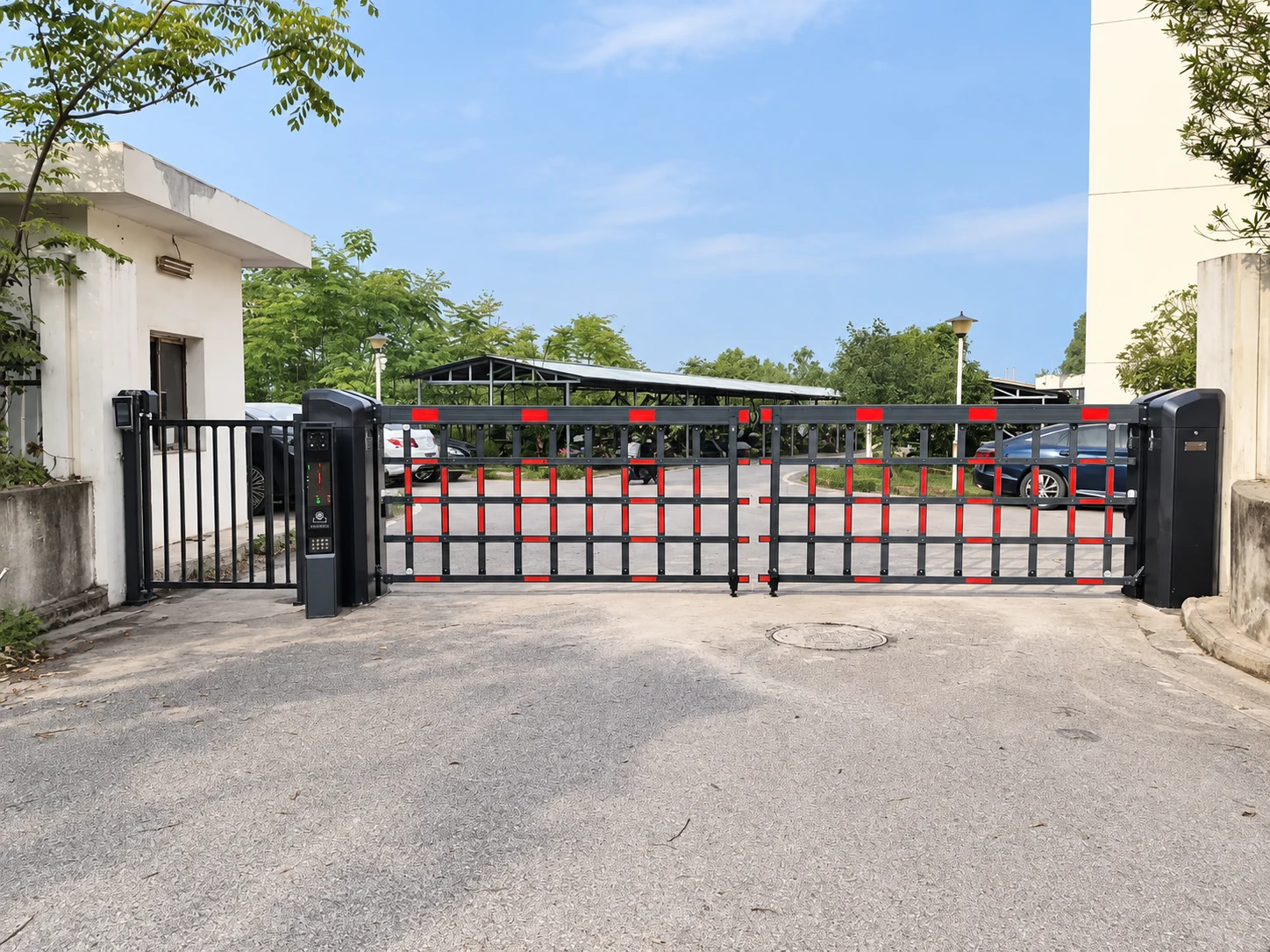
What the photograph shows
Use the layout to frame a similar requirement, then select the model and configuration for your order.
Before choosing equipment
State whether the entrance needs separate entry and exit, reversible traffic or a different operating sequence. Two barriers alone do not define that logic.
Measure from each cabinet position to the required closing point. Include the centre meeting area, ground conditions and any support requirements.
List recognition, detection and manual release needs for each direction. Add shared records or parking software only when the operating plan requires them.
Products & supply scope
Choose the products you need. Our technical team can review the layout and connections with you.
Quote each barrier with its boom form, length requirement and installation side identified.
Choose recognition terminals and define any software or controller requirement for the entry and exit arrangement.
Treat the side pedestrian gate and reader as a separate passage within the same purchasing brief.
Shunjie technical support
Share your entrance photos, dimensions or existing equipment details. Our technical team can help you review the product selection, mounting and connections before you order.