
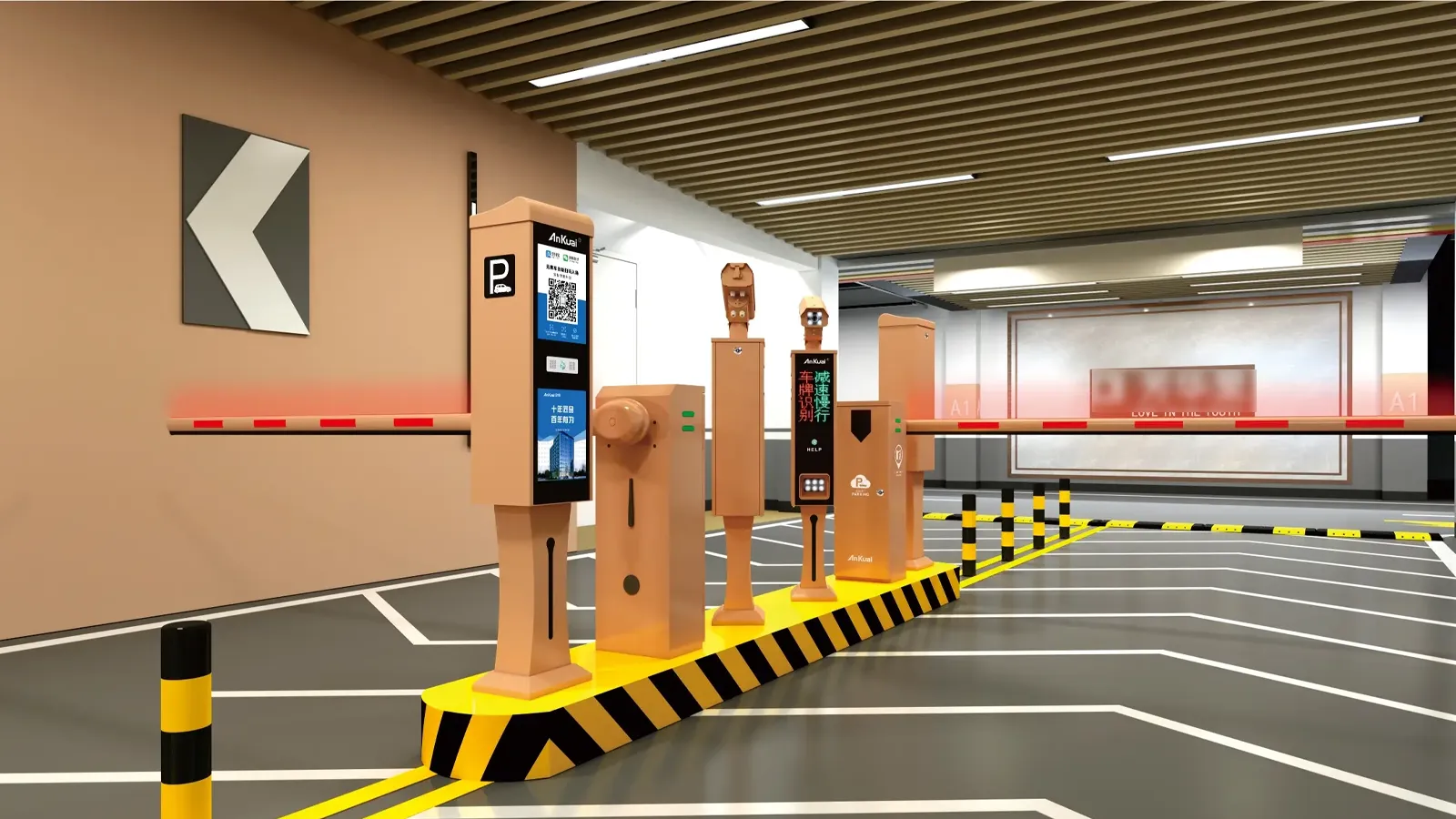
Benefits of a License Plate Recognition Barrier: Unattended Access, Automatic Gate Opening, and QR Code Payment
A license plate recognition barrier system is valuable because it turns the vehicle plate into the access credential. Instead of relying on paper tickets, access cards, or a cashier at the exit, the system reads the plate, applies access or charging rules, and opens the barrier when the vehicle is allowed to pass. When QR code payment is added, temporary visitors can pay on their phones and leave faster, while operators gain cleaner records, less manual handling, and a better fit for unattended parking operations.
What Is a License Plate Recognition Barrier System?
A license plate recognition barrier system combines an LPR camera, OCR-based plate reading, management software, and a barrier gate. As the vehicle enters or exits, the camera captures the plate image, the software converts it into text, and the platform checks whether that vehicle is on a whitelist, has a valid session, has paid, or needs another action before the gate opens. In parking projects, the same core technology may be called LPR, ALPR, or ANPR, depending on the region.
Compared with a traditional ticket-based setup, the key difference is that the plate itself becomes the credential. That allows the parking system to link entry time, exit time, user type, payment status, and exception handling to the same vehicle record instead of depending on a paper ticket or card being presented correctly at each step.
How Does an LPR Barrier Work in an Unattended Parking Lot?
In a typical unattended workflow, the vehicle approaches the lane and the camera captures the license plate. The system then checks the rule that applies to that vehicle, such as resident access, monthly subscription, staff permission, booking, grace period, or temporary parking session. If the conditions are met, the barrier opens automatically. On exit, the plate is read again, the parking duration is matched to the same session, the fee is calculated if needed, and the system checks whether payment has been completed before releasing the gate.
When QR code payment is included, the temporary visitor usually scans a code on site, opens a payment page, identifies the vehicle by plate number or session details, pays online, and then exits. Some systems support app-free web payment, while others can also connect to stored cards, mobile wallets, or other digital payment methods.
What Are the Main Benefits of Unattended Access?
The biggest benefit is that day-to-day vehicle flow can continue without depending on a staffed booth for every entry and exit. That reduces staffing pressure, supports longer service hours, and helps operators move toward ticketless and cashless workflows. Because the system records vehicle activity in a centralized platform, it also gives operators a clearer audit trail for access, payment, and exception handling.
Another benefit is consistency. A manual process often depends on the driver taking a ticket, keeping it, paying correctly, and presenting it again at the right point. An LPR barrier reduces those touchpoints by using the plate read as the common record from entry to exit. That does not remove every exception, but it does reduce the number of routine interactions that require staff involvement.
Table 1: Traditional Parking System vs. LPR Barrier System
| Aspect | Traditional ticket/card parking | LPR barrier + QR payment | Practical effect |
|---|---|---|---|
| Vehicle credential | Paper ticket, card, or token | License plate number | Fewer physical items to issue, lose, or replace |
| Entry process | Driver stops for ticket/card action | Camera reads plate and barrier opens automatically when rules match | Faster flow at the lane |
| Exit process | Ticket check, cashier, or pay station step | Plate re-read, payment verified, gate opens | Smoother exit for paid or authorized vehicles |
| Record matching | Ticket number or manual reconciliation | Centralized plate-based entry/exit record | Easier audit trail and dispute checking |
| Staffing model | More on-site intervention | Better suited to unattended or remotely assisted operation | Lower routine workload |
| Main dependency | Consumables and manual handling | Camera setup, lane design, software integration | Better performance depends on good installation |
This comparison reflects how current parking access platforms use centralized records, vehicle recognition, digital payment, and automatic barrier logic to reduce routine manual steps while keeping exception handling available when needed.
Why Automatic Gate Opening Improves the Driver Experience
From the driver’s point of view, automatic gate opening mainly means less waiting and fewer repeated actions. Pre-registered users do not need to present a card or ticket at every visit, and temporary users can move through the site with fewer stops if payment has already been completed or is easy to complete on mobile. Industry parking vendors consistently frame this as a smoother entry-and-exit journey because the system reduces friction at the most stressful points of the parking experience: the gate, the queue, and the payment step.
It also creates a more modern impression of the site. For residential projects, office parks, hospitals, hotels, and busy commercial lots, that matters because parking is often the first physical touchpoint a visitor experiences. A gate that recognizes the vehicle and reacts quickly feels more organized than a lane that still depends on paper tickets, cash handling, or manual release for normal traffic.
How QR Code Payment Works with License Plate Recognition
The value of QR payment is that it fits naturally into a ticketless journey. The camera handles identification, while the QR code handles payment. In a common setup, the driver parks first, scans a code from signage before leaving, enters the license plate or other session details, pays on a mobile payment page, and then drives out. The exit lane checks that paid status against the plate record and opens the barrier.
For operators, QR payment can be simpler than pushing every temporary visitor through a staffed cashier or a physical pay station. Vendors promoting scan-to-pay parking emphasize reduced queues, easier digital receipts, better integration with promotions or validations, and less dependence on hardware tied to ticket printing or cash handling.
In practice, this makes QR payment especially useful for transient users, while residents, staff, VIP users, or monthly vehicles can still rely on whitelist or subscription logic for automatic access. That hybrid approach is common because parking lots rarely serve only one user group.
How LPR + QR Payment Helps Parking Operators
For operators, the real advantage is not just automatic gate opening. It is the combination of identification + rule engine + payment + records. Once those pieces work together, the parking lot can run with less routine intervention, and management can review who entered, when they entered, whether they paid, and how exceptions were resolved.
This also helps scale operations. A centralized system is easier to monitor across multiple lanes or multiple sites than a process that depends heavily on local paper handling or manual fee checking. Operators can also keep hybrid options when needed, such as combining QR payment with bank card, RFID, or cash options in specific environments where not every driver will want to use a phone.
Table 2: Key Functions and Benefits of Unattended LPR Parking with QR Payment
| Core function | What the driver experiences | What the operator gains |
|---|---|---|
| Plate recognition at entry | No ticket pickup for normal flow | Automatic entry record |
| Whitelist / permit check | Registered vehicles enter smoothly | Less manual verification |
| Plate recognition at exit | Fewer repeated checks | Accurate session matching |
| QR scan-to-pay | Fast mobile payment before departure | Less cash and ticket handling |
| Payment verification before gate release | Cleaner exit flow | Stronger fee control |
| Centralized logs and reports | Faster problem resolution when needed | Better auditing, reporting, and management |
| Remote assist / intercom fallback | Help is still available | Unattended operation without losing control |
The best results come when these functions are designed as one workflow rather than separate devices added lane by lane. That is why mature deployments usually combine the camera, the barrier, the payment logic, and the management platform instead of treating them as isolated components.
Where These Systems Work Best
LPR barrier systems work especially well in places that need a balance of speed, control, and flexible user rules. Common examples include commercial parking lots, residential communities, office buildings, hospitals, hotels, factories, logistics sites, and mixed-use properties with both authorized vehicles and temporary visitors. Product and deployment pages across the parking industry repeatedly position LPR-based access control for exactly these environments because they tend to have recurring traffic, peak-hour pressure, and a strong need for cleaner records.
They are also a good fit for projects that want to move gradually. A site does not always need to jump from fully manual operation to fully barrierless parking in one step. Many operators first adopt LPR at entry and exit, then add QR payment, remote assistance, digital validations, or hybrid payment options as the workflow matures.
What to Consider Before Choosing an LPR Barrier System
The first thing to understand is that real-world recognition accuracy depends on conditions, not just on a brochure figure. Camera quality matters, but so do lighting, vehicle speed, camera angle, weather, lane design, and the clarity of the plate in the reading zone. In parking deployments, correct placement is often more important than simply choosing a higher-resolution camera.
The second consideration is local fit. Buyers should check whether the system supports the local plate format, whether payment tools match local habits, whether the software integrates with existing parking or property systems, and whether the site needs a hybrid payment strategy instead of QR-only payment. A strong project is not just “automatic”; it is adapted to the actual users of the site.
The third consideration is exception handling. Unattended does not mean unmanaged. Good projects still keep a manual override path, remote assistance, clear signage, and a defined process for unreadable plates, unpaid sessions, tailgating attempts, or temporary network problems. Real case studies in digital parking still include centralized control rooms, intercom support, and remote assistance because automation works best when exceptions have a safe fallback.
Finally, buyers should review local privacy and data-retention requirements before deployment. LPR systems store identifiable vehicle data, and vendors themselves note that legal requirements vary by country, state, or province. That makes data handling policy part of the buying decision, not just a technical detail for later.
Common Problems and How to Avoid Them
The most common issue is unreadable plates. In many cases, the cause is not the concept of LPR itself but poor setup: bad camera angle, too much vehicle speed in the capture zone, weak lighting, glare, rain, plate occlusion, or an overly wide lane scene that reduces usable plate detail. The fix is usually better lane design, tighter capture conditions, and testing in day, night, and bad weather before final handover.
Another issue is payment friction. If the QR path is too long, the signage is unclear, or mobile coverage is weak, drivers may reach the exit without completing payment. That is why the best scan-to-pay flows keep the steps simple, make the payment page easy to access, and provide clear on-site instructions and digital receipts. In some sites, a backup payment channel is still worth keeping.
A third issue is assuming that unattended means no support is needed. In reality, high-performing unattended sites still rely on remote monitoring, intercom support, software logs, and clear operator rules for exceptions. Automation removes repetitive work, but it does not remove responsibility for customer support or operational control.
Is an LPR Barrier Better Than a Traditional Parking System?
For most medium- and high-traffic sites, the answer is yes. If the site wants faster access, less ticket handling, easier payment, and a better path to unattended operation, an LPR barrier system is usually the more scalable choice. It is especially strong where there are recurring users, mixed vehicle groups, or pressure to modernize the customer experience without adding more booth staff.
That said, “better” still depends on the project. A very small site with low traffic, poor mobile connectivity, or limited integration needs may not require a full digital workflow from day one. In those cases, a hybrid approach can be smarter: keep the barrier, add LPR first, then add QR payment and broader automation as the operation becomes ready. This is often a more practical upgrade path than trying to change every part of the parking journey at once.
Conclusion
A license plate recognition barrier is more than a gate that opens automatically. It is a practical way to connect vehicle identification, parking rules, payment status, and barrier control into one workflow. That is why its biggest benefits are not only faster entry and exit, but also more reliable unattended operation and a cleaner, more modern user experience.
For parking operators, the combination of unattended access, automatic gate opening, and QR code payment can reduce routine manual work, simplify fee collection, and make traffic flow easier to manage. For drivers, it usually means less waiting, fewer touchpoints, and a more convenient way to pay and leave. The projects that perform best are the ones that treat LPR, barrier control, payment, and exception handling as one integrated system instead of four separate purchases.
FAQ
1. What is a license plate recognition barrier?
It is a parking access system that uses a camera and OCR software to read a vehicle’s plate and then uses that record to control entry, exit, permissions, and sometimes payment verification.
2. Can an LPR barrier system really support unattended parking?
Yes. Many current deployments use centralized software, automatic gate logic, digital payment, and remote assistance so the site can operate with much less routine on-site intervention.
3. How does QR code payment work in a parking lot?
The driver scans a QR code from signage or the parking session, opens a payment page, identifies the session by plate or related details, pays on the phone, and then exits after the system verifies payment.
4. What happens if the camera cannot read a license plate?
A well-designed system should include fallback handling such as remote assistance, intercom support, manual override, or an exception workflow. Better camera placement, speed control, and lighting also reduce these cases.
5. Is LPR better than a ticket parking system?
In many medium- and high-traffic applications, yes, because it reduces ticket handling, improves automation, and supports a smoother entry-and-exit journey. However, the best choice still depends on traffic volume, user mix, and site conditions.
6. Can the same system manage monthly users and temporary visitors?
Yes. Modern LPR parking platforms commonly apply different rules to different user groups, such as whitelists for approved vehicles and digital payment workflows for transient users.
7. What should buyers check before installation?
Focus on local plate support, camera placement, lane design, low-light and weather performance, payment integration, privacy compliance, and exception handling. Those details usually matter more than a headline accuracy claim alone.