
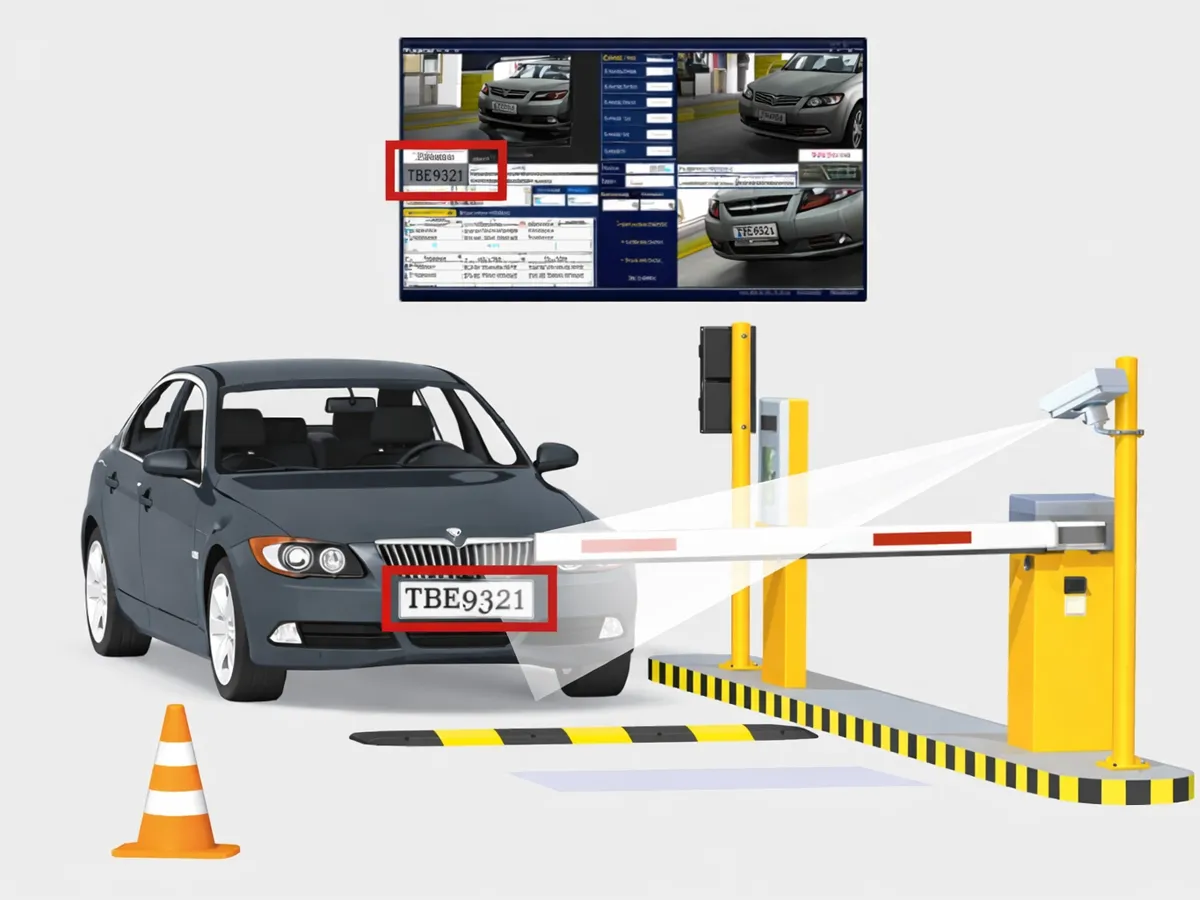
License Plate Recognition (LPR) is no longer just a “nice to have” feature for modern parking sites. For many residential communities, commercial buildings, factories, hospitals, hotels, and retail car parks, it is now one of the most practical ways to improve traffic flow, reduce manual work, and tighten vehicle access control.
In simple terms, LPR lets your parking system identify a vehicle by its license plate as it enters and exits. That makes ticketless access, automated billing, whitelist and blacklist control, and real-time parking records much easier to manage. When the system is designed correctly, the result is a faster, safer, and more efficient parking operation.
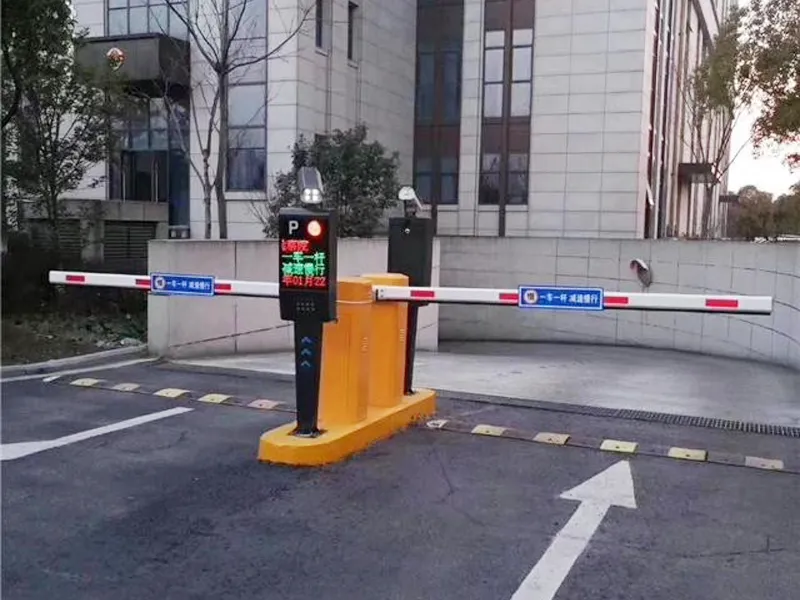
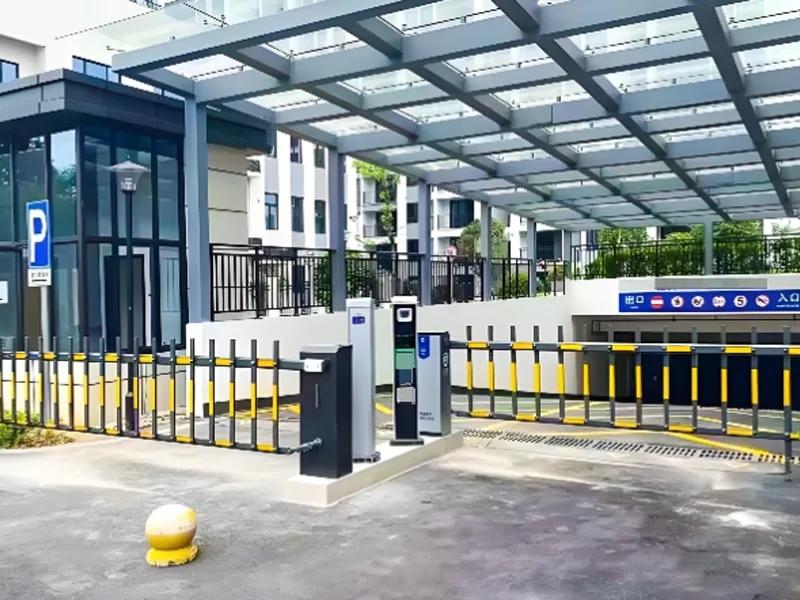
What is LPR in a parking system?
LPR, also called ANPR or ALPR in some markets, uses cameras plus recognition software to read a vehicle’s license plate. In a parking application, the plate becomes the vehicle’s credential.
At the entrance, the system captures the plate number, checks permissions or parking rules, and can trigger the barrier to open automatically. At the exit, the system verifies the plate again, checks payment or authorization status, logs the visit, and opens the barrier if all conditions are met.
A complete LPR parking solution typically includes:
- LPR cameras at entry and exit lanes
- Barrier gates or turnstiles where access control is required
- Parking management software
- Payment equipment for paid sites
- Vehicle lists such as monthly users, VIP vehicles, staff cars, or blocked vehicles
- Reporting and event logs for management and auditing
For operators, the biggest advantage is that the system connects identification, access control, payment, and records into one workflow.
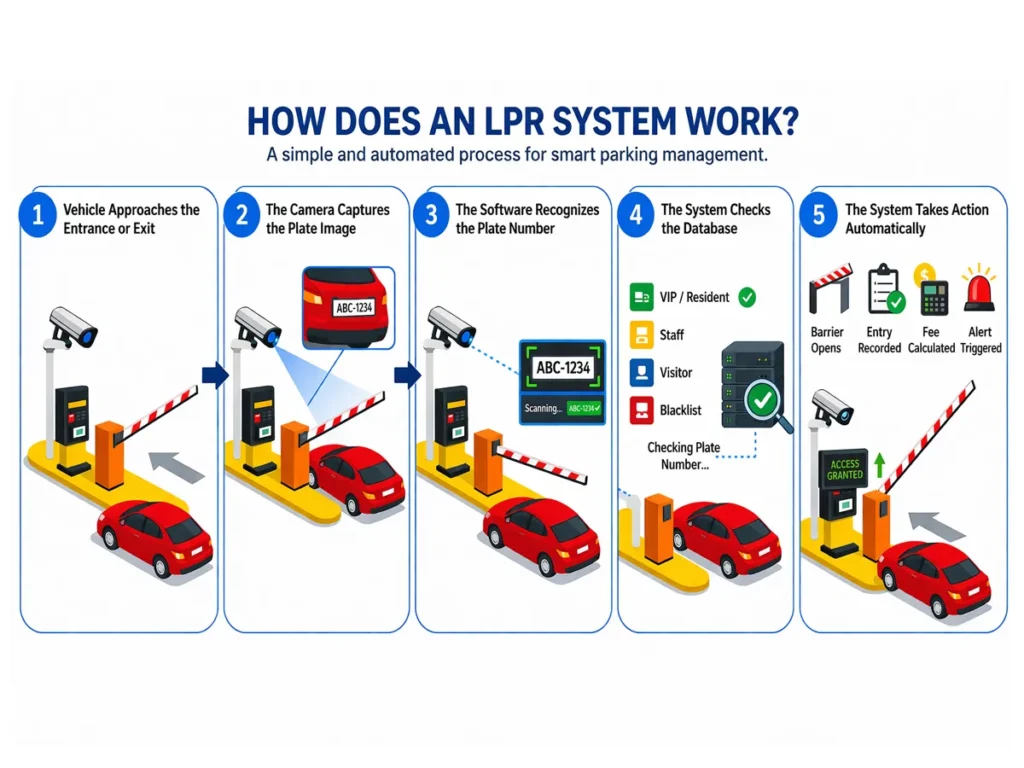
Reason 1: Faster vehicle entry and exit
The most obvious reason to upgrade to LPR is speed. Traditional ticket-based parking often slows vehicles down because drivers need to stop, roll down the window, collect a ticket, scan a card, or wait for staff assistance. During peak hours, even a few extra seconds per vehicle can turn into a long queue.
With LPR, the system reads the plate automatically and processes the vehicle without requiring the driver to handle a ticket or access card. For monthly users, staff, residents, and pre-registered visitors, this creates a much smoother experience.
This matters most in places where vehicle throughput directly affects customer satisfaction or site efficiency, such as:
- Office buildings during morning and evening rush hours
- Residential communities with frequent resident access
- Hospitals where quick vehicle movement is critical
- Shopping centers during weekends and holidays
- Factories and logistics parks with shift changes
A smoother entrance and exit experience is not only more convenient for drivers. It also helps reduce lane congestion and makes the parking facility feel more modern and organized.
Reason 2: Lower labor dependence and fewer manual errors
Manual parking operations require staff time for issuing tickets, checking access permissions, calculating fees, solving disputes, and handling exceptions. That model is often slow, labor-intensive, and vulnerable to mistakes.
LPR reduces those repetitive tasks by automating key steps in the process. Instead of relying on staff to record vehicle details or verify access manually, the system handles identification automatically and stores the record in software.
This can help operators:
- Reduce manual ticket handling
- Cut down on cashier workload
- Minimize data entry mistakes
- Lower the number of access disputes
- Move toward unattended or semi-attended parking operation
For many sites, the goal is not to remove people completely. It is to let staff focus on exceptions, customer service, and supervision instead of routine gate handling.
Reason 3: Better security and stronger access control
LPR improves security because every recognized vehicle entry and exit can be time-stamped and stored in the system. That creates a useful audit trail for daily management and post-incident review.
More importantly, LPR gives operators much tighter vehicle access control. You can build rules around different types of vehicles, such as:
- Whitelist vehicles, including residents, staff, VIP users, and approved suppliers
- Blacklist vehicles, including blocked or unauthorized cars
- Temporary visitor lists for scheduled access
- Paid users versus unpaid users
- Time-based access rules for service vehicles or contractors
This makes LPR especially valuable for sites where vehicle control is part of the overall security strategy, including residential compounds, office campuses, industrial facilities, and mixed-use developments.
Compared with manual checking, automated plate-based access is faster, more consistent, and easier to scale across multiple lanes or multiple sites.
Reason 4: More accurate billing and better revenue protection
In paid parking, revenue leakage often comes from small operational weaknesses: lost tickets, incorrect timestamps, manual fee errors, ticket swapping, exceptions handled without records, or difficulty proving how long a vehicle stayed.
LPR helps solve these problems because each parking stay is linked to a specific vehicle record. Entry time, exit time, payment status, and exception handling can all be tied to the same plate-based transaction.
That improves:
- Fee calculation accuracy
- Dispute handling
- Lost-ticket management
- Rule enforcement for unpaid or overstaying vehicles
- Financial transparency for operators
For operators of commercial car parks, hotels, malls, and mixed-use properties, this is one of the strongest business reasons to upgrade. A system that identifies vehicles reliably and logs each stay clearly can help reduce avoidable revenue loss while giving management a better record of what happened at each lane.
Reason 5: Real-time visibility into parking activity
A modern parking system should do more than open and close barriers. It should also help operators understand what is happening on-site.
Because LPR systems generate vehicle-level event records, they can support better visibility into:
- Entry and exit traffic by hour or day
- Peak periods and lane congestion patterns
- Frequent vehicles and user types
- Stay duration trends
- Occupancy-linked decisions when combined with other parking tools
- Exception events that require follow-up
For single-site operators, this data helps improve daily management. For multi-site operators, it can support more consistent reporting, better staffing decisions, and more informed upgrades over time.
In short, LPR turns vehicle movement into usable operational data instead of leaving management dependent on manual observation.
Reason 6: Easier integration with modern parking and security systems
Another reason many facilities upgrade to LPR is integration. In older parking setups, the barrier gate, payment process, visitor approval, and reporting tools often work separately. That creates delays, double-handling, and limited visibility.
LPR makes it easier to connect the parking workflow into one system. Depending on the project, it can integrate with:
- Barrier gates
- Self-service payment stations
- QR, card, or cash payment workflows
- Intercom systems
- Visitor management platforms
- Building or campus access control systems
- Centralized software for multi-lane or multi-site management
This is important because an LPR upgrade should not be viewed as only a camera purchase. It is a system upgrade. The best results usually come when the recognition device, barrier, display terminal, and payment method work together as one solution.
Reason 7: A better long-term upgrade than tickets or cards in many projects
Many parking operators are choosing between three common methods: ticket-based parking, RFID/card-based access, and LPR. Each method still has a place, but LPR is often the best long-term upgrade when convenience, automation, and flexibility are priorities.
Comparison table: LPR vs ticket vs RFID/card
| Method | Driver action required | Speed at entry/exit | Lost credential risk | Labor demand | Best fit |
|---|---|---|---|---|---|
| LPR | Usually none or minimal | Fast | Very low | Low | Modern gated parking, residential, office, hospital, mall, factory |
| Paper ticket | Driver takes and keeps ticket | Slower | High | Medium to high | Budget-sensitive sites or legacy operations |
| RFID/card | Driver presents tag or card | Medium to fast | Medium | Low to medium | Fixed-user groups, staff parking, subscription access |
LPR is not automatically better in every case. For example, RFID can still work well in closed environments with a stable user group. Some projects also benefit from a hybrid approach, such as LPR for cars and RFID or remote control for motorcycles, staff, or special lanes.
However, for sites that want ticketless access, lower friction, easier visitor handling, and better system records, LPR is often the most scalable upgrade path.
What to check before upgrading to LPR
LPR can deliver strong results, but performance depends heavily on system design and site conditions. Before upgrading, operators should evaluate the following points carefully.
1. Recognition accuracy in real conditions
Do not judge a system only by a lab claim. Real-world performance depends on lighting, plate format, camera angle, vehicle speed, weather, dirty plates, and lane design.
2. Camera placement and lane setup
Even a strong recognition engine can underperform if the camera is installed at the wrong height or angle, or if vehicles do not slow down properly in the reading zone.
3. Software stability and integration
A parking system must do more than read plates. It should also manage access logic, payment rules, user lists, records, and exceptions in a stable way.
4. Payment workflow
For paid parking, make sure the payment method matches the site. Different projects may need QR payment, bank card, cash, self-service kiosks, monthly billing, or a combination.
5. Privacy and compliance
Because license plate data may be regulated as personal data in many jurisdictions, operators should check local rules for signage, data handling, retention, access permissions, and deletion policies.
6. Supplier experience and support
A good supplier should understand not only recognition technology, but also barriers, payment integration, lane design, installation requirements, and long-term technical support.
7 benefits of LPR at a glance
| Benefit | What it improves | Typical result for operators |
| Faster entry and exit | Traffic flow | Shorter queues and smoother peak-hour operation |
| Less manual work | Daily operations | Lower dependence on constant gate staffing |
| Better access control | Site security | More reliable control of authorized and unauthorized vehicles |
| More accurate billing | Revenue management | Fewer disputes, fewer errors, and clearer records |
| Real-time records | Management visibility | Better reporting and operational decisions |
| Easier integration | System efficiency | Smoother connection with barriers, payments, and visitor tools |
| Better user experience | Customer satisfaction | More convenient ticketless access for drivers |
Is LPR right for your parking facility?
LPR is a strong fit for many parking environments, especially when operators want to combine automation, security, and a better user experience.
It is often a good choice for:
- Residential communities
- Office buildings
- Hospitals
- Hotels
- Shopping centers
- Factories and logistics parks
- Commercial and mixed-use properties
- Sites planning to move toward unattended operation
A hybrid solution may be better when the site has multiple vehicle types, unusual lane conditions, or special access rules. In those cases, LPR can still be the core technology, but it may work best alongside barrier control, display terminals, payment stations, RFID, remote access, or intercom support.
Conclusion
Upgrading to License Plate Recognition is not just about replacing tickets with cameras. It is about improving how the entire parking system works.
When LPR is implemented well, it can speed up vehicle flow, reduce manual workload, strengthen access control, improve revenue accuracy, and give operators better visibility into daily activity. For many parking facilities, that makes it one of the most practical upgrades available today.
The key is choosing a solution that matches your site conditions, payment needs, traffic patterns, and long-term management goals. A well-designed LPR system should not only recognize license plates accurately, but also work smoothly with barriers, software, payment tools, and on-site operations.
If you are planning an LPR upgrade, focus on the full system, not just the camera. That is what turns recognition technology into a reliable parking management solution.
FAQ
1. Is LPR the same as ANPR or ALPR?
Yes. Different regions use different terms, but in parking projects they usually refer to the same type of license plate recognition technology.
2. Is LPR better than RFID for parking access?
Not always. LPR is often better for ticketless convenience and flexible visitor handling, while RFID can still work well for fixed-user groups. Many projects use both.
3. Can LPR work in low-light or outdoor environments?
Yes, but performance depends on the quality of the camera, lighting design, lens, installation angle, and the overall lane setup.
4. Does LPR reduce staffing costs?
It can reduce routine gate and cashier workload, especially in unattended or semi-attended parking models. The exact savings depend on how the site operates today.
5. Can LPR help reduce revenue leakage?
Yes. It improves traceability by linking each vehicle stay to a plate-based entry and exit record, which helps reduce disputes and manual errors.
6. What parking sites benefit most from LPR?
Residential communities, office buildings, hospitals, hotels, retail car parks, factories, and mixed-use sites often benefit the most.
7. Does LPR require internet access?
That depends on the system design. Some features may run locally, while centralized management, cloud reporting, and remote support may require network connectivity.
8. What is the biggest mistake when buying an LPR parking system?
Focusing only on claimed recognition accuracy without checking camera placement, lane design, software workflow, payment integration, and after-sales support.