
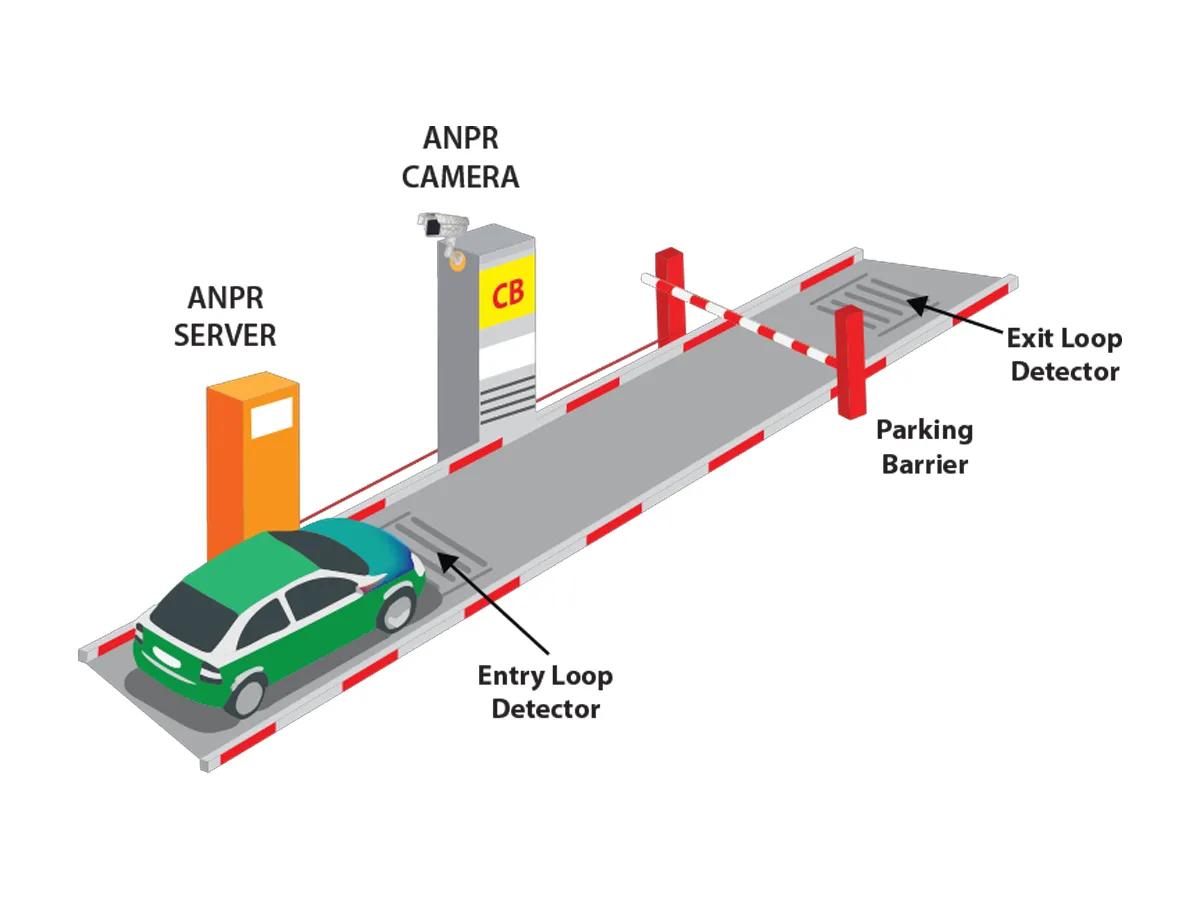
ANPR parking is a parking management system that uses cameras and optical character recognition to read a vehicle’s number plate when it enters and leaves a site. The system links that plate read to time, location, payment, permit, validation, or enforcement rules, which is why it is widely used in ticketless parking, barrier control, and access management. In many markets, ANPR, LPR, and ALPR refer to the same core technology, with the name changing mainly by region.
In simple terms, ANPR parking replaces manual ticket handling or visual plate checks with automatic vehicle identification. Public parking operators already use it in live car parks to support pay-on-departure, barrier opening, permit recognition, and ticketless journeys for drivers.
What does ANPR stand for in parking?
ANPR stands for Automatic Number Plate Recognition. In parking, it means a camera-based system reads the vehicle registration mark, stores the entry and exit event, and uses that record to automate access, charging, validation, or compliance workflows. Regulators also note that ANPR systems typically capture the vehicle image, the number plate image, the vehicle registration mark, and often supporting data such as date, time, and location.
For SEO and buyer education, it helps to explain the naming clearly. “ANPR” is common in the UK, Europe, and parts of Asia, while “ALPR” is more common in North America, and “LPR” is often used as a generic commercial term. The underlying workflow is the same: capture, detect, read, and convert the plate into usable digital data.
How does ANPR parking work?
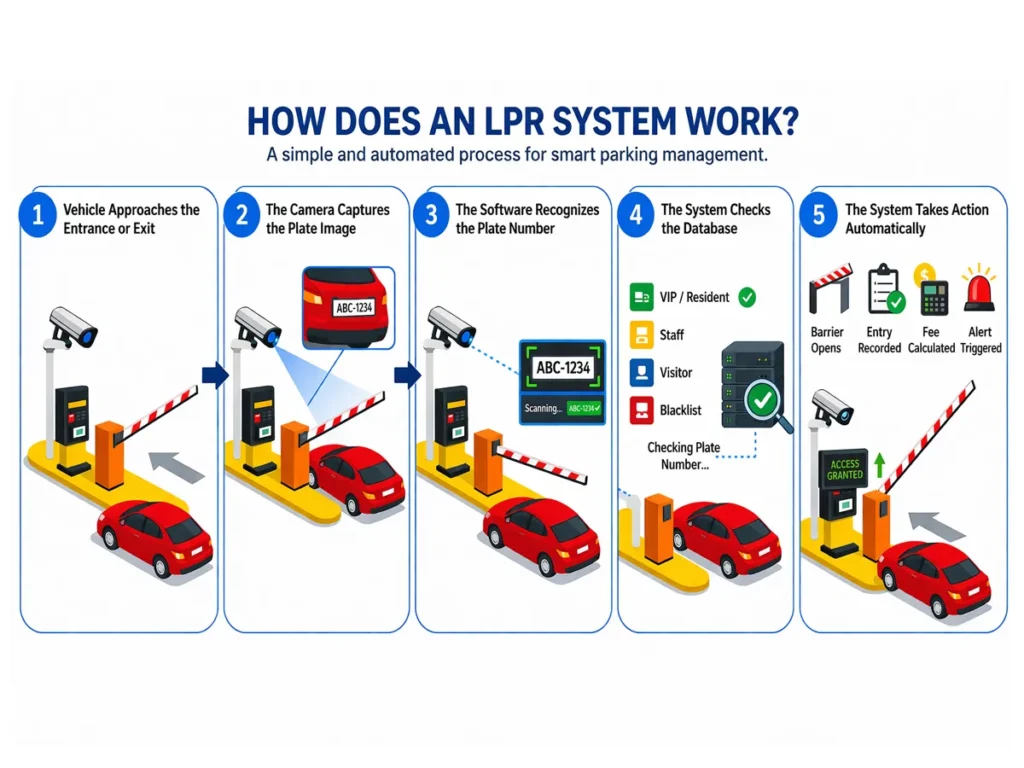
At a practical level, the workflow is straightforward. A vehicle arrives at the entrance, a camera captures the number plate, and software reads the characters. That plate read is then matched to parking rules, payment status, an approved vehicle list, or a barrier command. When the vehicle leaves, the system reads the plate again and checks whether the stay is permitted, paid, or validated.
In a barriered car park, the entry camera reads the plate and the barrier opens automatically. Before exit, the driver may pay at a pay station, through an app, or at the exit barrier itself. Councils using ANPR explain that the system reads the plate again on exit and confirms payment before the barrier lifts.
In a barrier-free setup, the process can be even simpler. Oxford University Hospitals describes an ANPR model with no barriers and no paper tickets, where the system records entry and exit and drivers pay on departure. This is a useful example because it shows ANPR parking is not tied to one hardware format; it can support both controlled-entry sites and open-access ticketless sites.
From a technology viewpoint, the core chain is image capture, plate detection, character segmentation, OCR, and database action. Modern ANPR cameras often use features such as infrared illumination, wide dynamic range, fast shutter speeds, and dedicated optics to improve plate readability in difficult conditions such as glare, shadows, or nighttime operation.
What are the main benefits of ANPR parking?
The first major benefit is a smoother driver journey. ANPR can remove paper tickets, reduce friction at the gate, and support pay-on-exit or automatic payment models. Councils and hospitals using it describe a more convenient parking experience, especially where users can pay by machine, app, or contactless at the barrier without needing a ticket to leave.
The second benefit is better operational efficiency. WWL Teaching Hospitals says ANPR is part of making parking more efficient, safer, and easier to navigate, while Crawley Borough Council states its town-centre car parks were upgraded with ANPR to create a more secure offer and reduce the need for physical enforcement activity. For operators, that means fewer manual checks, better event logging, and cleaner audit trails for disputes or exceptions.
A third benefit is more flexible parking control. ANPR can work with permits, season tickets, exemptions, blue badge workflows, whitelist and blacklist rules, and site-specific validations. York and Chelmsford both explain that registered vehicle details can be linked to concessions or season-ticket permissions so the system applies the correct access or charge logic automatically.
Another important benefit is data visibility. Because the system records entry and exit events, operators can better understand length of stay, peak periods, repeat usage, and exception cases. That makes ANPR valuable not just for enforcement, but also for traffic flow, site planning, and parking policy design.
Where is ANPR parking used in the real world?
Hospitals are one of the clearest real-world use cases. Oxford University Hospitals uses ANPR for patient and visitor parking with payment on departure, while WWL Teaching Hospitals uses a ticketless ANPR model across hospital sites to make parking more efficient and easier to manage. Medway’s hospital guidance also shows ANPR working with barriers, pay stations, contactless exit payment, and concession handling.
Council and city-centre car parks are another strong example. York uses ANPR cameras for ticketless parking, and Chelmsford says ANPR removes the need for paper tickets in selected car parks. Crawley also links ANPR upgrades with a more secure parking offer and reduced on-site enforcement needs.
These live examples show why ANPR fits a wide range of parking environments: sites with high visitor turnover, mixed user groups, paid public parking, permit-based parking, and locations where operators want less manual intervention and a more digital driver experience.

Does ANPR parking always need barriers or paper tickets?
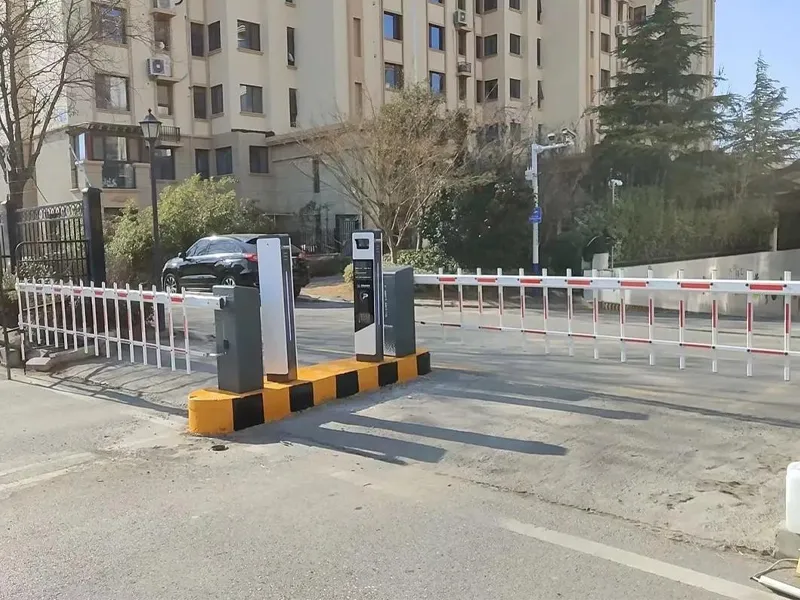
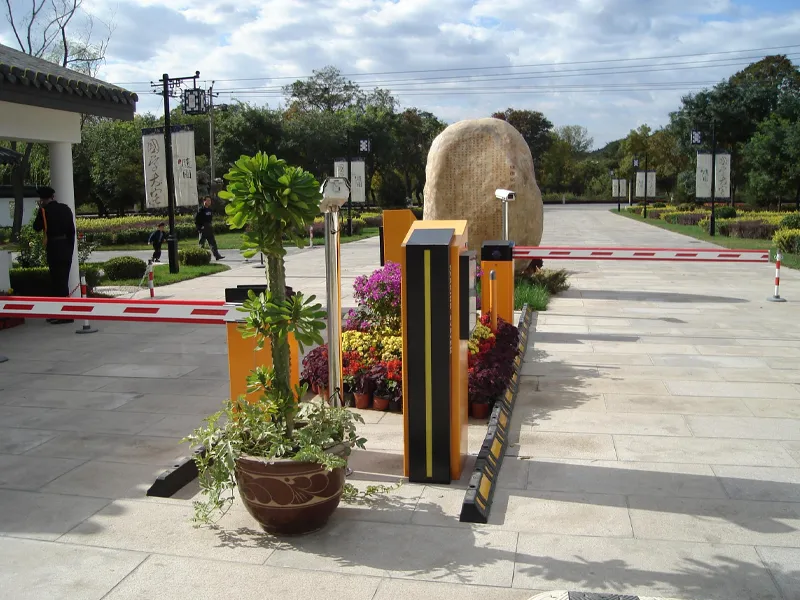
No. ANPR parking can be barriered or barrier-free. In Chelmsford and Medway, ANPR is used with entry and exit barriers, while Oxford University Hospitals describes a no-barrier, no-ticket model. That flexibility is one reason ANPR is popular for both retrofit projects and new parking deployments.
Paper tickets are also optional, not essential. Some sites issue a backup ticket only if the number plate is not read correctly, while other sites operate entirely ticketless. That gives operators more freedom to design the experience around traffic flow, budget, and local user expectations.
What can ANPR parking help automate?
ANPR parking can automate more than just entry and exit. Depending on the software stack and site rules, it can automate permit recognition, season-ticket access, payment matching, barrier commands, grace-period handling, blue badge or concession workflows, and exception routing when a transaction needs human review. Public operator guidance shows these workflows already in use at live sites.
This matters for site operators because automation reduces repetitive manual tasks. Instead of checking windscreens, collecting tickets, or managing frequent access credentials by hand, the system can identify vehicles by registration number and apply the relevant rule automatically.
What are the limitations of ANPR parking?
ANPR is powerful, but it is not magic. Accuracy can be affected by lighting, weather, glare, camera angle, motion blur, and dirty or obstructed plates. Real-world accuracy also depends on site layout and camera setup, not just the recognition software itself.
Operators also need exception handling. York warns that some non-standard number plates, including unusual fonts, spacing, raised or gel plates, private registrations, and some non-UK formats, may not always be recognised correctly. In those cases, the system may need manual confirmation or an intercom-assisted exit flow.
There are also process risks if the system is configured poorly. The British Parking Association notes that repeat users within a 24-hour period can sometimes have the wrong entry and exit paired together, creating a false overstay unless operators review transactions properly. That is a useful reminder that successful ANPR parking depends on software logic, site rules, and operational checks, not only on camera hardware.
Is ANPR parking legal and privacy-compliant?
ANPR parking can be used lawfully, but it must be operated responsibly. The ICO says ANPR systems can collect and analyse large quantities of personal data in real time, and that vehicle registration marks can be personal data in the relevant context. Because of that, operators need a valid purpose, clear notices, and responsible data handling practices.
In private parking, signage is especially important. South Ayrshire Council’s guidance says terms and conditions should be clearly displayed, particularly at the entrance and other key areas, and the British Parking Association also emphasizes clear signage where ANPR is used. For practical compliance, operators should think about transparency, retention, access control, and who can see or act on the captured data.
For a global audience, the legal details vary by country, so any site-specific ANPR deployment should be checked against local privacy, parking, and surveillance rules. The technical concept is global, but the compliance framework is always local.
Is ANPR parking right for every car park?
ANPR is a strong fit when a site wants faster access, ticketless parking, better audit trails, automatic permit handling, or less manual enforcement. It is especially useful for hospitals, public car parks, retail-focused sites, mixed-use developments, and managed access environments where the operator needs reliable vehicle identification at scale.
It is a weaker fit when the site has poor camera positions, unusually complex local rules, highly inconsistent plate formats, or no plan for handling unreadable plates and special cases. In those situations, ANPR can still work well, but only if the design, software rules, and support process are matched to the real operating environment.
Final takeaway
ANPR parking is best understood as automatic vehicle identification for parking operations. It reads the number plate at entry and exit, connects that event to payment or access rules, and helps operators run a smoother, more digital car park with fewer manual steps. Real-world deployments in hospitals and council car parks show that it can support ticketless journeys, barrier automation, permit logic, and pay-on-departure models, but success still depends on camera setup, site design, signage, and privacy compliance.
FAQ
Is ANPR the same as LPR?
Usually yes. The main difference is naming by region: ANPR is more common in the UK and Europe, while LPR or ALPR is more common in North America.
Does ANPR parking mean there is no ticket?
Often yes, but not always. Some sites are fully ticketless, while others issue a backup paper ticket if the plate is not read properly.
Can ANPR work without barriers?
Yes. Some hospitals use ANPR with no barriers and no tickets, while other car parks use ANPR with automatic barriers.
What happens if the camera cannot read the plate?
Sites usually route the driver to a fallback process, such as a paper ticket, manual payment confirmation, or intercom assistance at the barrier.
What data does an ANPR parking system record?
Typically the vehicle image, number plate image, vehicle registration mark, and associated data such as time and location.
Is ANPR parking only used for enforcement?
No. It is also used for access control, permit recognition, ticketless parking, pay-on-departure, and operational reporting.